6 Best 72V Batteries for 2026 That Deliver Long-Lasting Power
You’re getting powerful, long-lasting 72V batteries in 2026 with serious range and durability. Choose from 105Ah LiFePO4 packs offering 8,000+ cycles, fast charging, and Bluetooth monitoring.
Need something lighter? There’s a 60Ah ebike-ready option.
Heavy-duty builds handle 800A peaks and include smart BMS protection. These rugged, high-capacity batteries deliver reliable performance for golf carts, UTVs, and e-bikes—you’ll see what sets each one apart.
Quick Overview
- High-capacity 72V 105Ah LiFePO4 batteries offer up to 8,000+ cycles for exceptional longevity and sustained power delivery.
- Fast charging enabled by 18A chargers allows 0%–100% charge in under 6 hours without compromising battery life.
- Built-in BMS with overcurrent, overheat, and low-temperature protection ensures safety and extends lifespan.
- Plug-and-play compatibility with major golf cart brands like EZGO and Club Car simplifies upgrades.
- IP67-rated enclosures and durable construction provide resistance to dust, water, and mechanical stress in demanding environments.
| 72V 105AH Lithium Golf Cart Battery with Fast Charger |  | Best Overall | Voltage: 72V (73.6V actual) | Capacity: 105Ah | Chemistry: LiFePO4 | VIEW LATEST PRICE | Read Our Analysis |
| 72V 105Ah LiFePO4 Golf Cart Battery Kit |  | Top Upgrade Pick | Voltage: 72V (70.4V) | Capacity: 105Ah | Chemistry: LiFePO4 | VIEW LATEST PRICE | Read Our Analysis |
| 72V 60Ah Lithium Ebike Battery with Charger |  | Lightweight Performance | Voltage: 72V | Capacity: 60Ah | Chemistry: LiFePO4 | VIEW LATEST PRICE | Read Our Analysis |
| 72V 105Ah Lithium Golf Cart Battery |  | Longest Lasting | Voltage: 72V (70.4V) | Capacity: 105Ah | Chemistry: LiFePO4 | VIEW LATEST PRICE | Read Our Analysis |
| 72V 105Ah LiFePO4 Golf Cart Battery |  | Reliable Workhorse | Voltage: 72V (70.4V) | Capacity: 105Ah | Chemistry: LiFePO4 | VIEW LATEST PRICE | Read Our Analysis |
| Enjoybot 72V 65Ah LiFePO4 Battery | 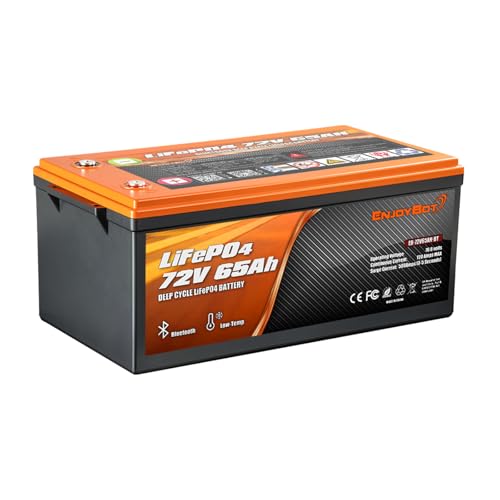 | Compact Powerhouse | Voltage: 72V | Capacity: 65Ah | Chemistry: LiFePO4 | VIEW LATEST PRICE | Read Our Analysis |
More Details on Our Top Picks
72V 105AH Lithium Golf Cart Battery with Fast Charger
If you’re upgrading a golf cart for heavy-duty use—like towing trailers or tackling steep terrain—the 72V 105Ah Lithium Golf Cart Battery with Fast Charger is your best bet. You get 7.728 kWh capacity, 200A continuous discharge, and 800A peak current for intense power when you need it.
The A+ LiFePO4 cells deliver 60% more power than similar batteries, while the built-in BMS protects against common risks. With 8,000+ cycles and a 5-year service guarantee, you’re investing in a decade of reliability.
The fast charger hits 50–100% in three hours, and the LCD screen plus Bluetooth app keep you informed. It fits EZGO, Yamaha, and Club Car models—plug-and-play simplicity.- Voltage:72V (73.6V actual)
- Capacity:105Ah
- Chemistry:LiFePO4
- BMS:200A with protections
- Monitoring:LCD touch screen + Bluetooth app
- Weight:140 pounds
- Additional Feature:800A max peak instant current
- Additional Feature:3C discharge for torque boost
- Additional Feature:5-year after-sales service
72V 105Ah LiFePO4 Golf Cart Battery Kit
You’ll get the most out of the 72V 105Ah LiFePO4 Golf Cart Battery Kit if you’re upgrading from lead-acid to a lighter, longer-lasting power solution that handles deep cycling with ease. You’re getting A-grade LiFePO4 cells built to deliver over 5,000 cycles at 80% depth of discharge.
It’s lightweight at 130 pounds, outputs up to 14.08 kW, and includes a 78.1V 15A charger, 2.8-inch touchscreen, and Bluetooth app monitoring. The built-in 200A BMS protects against overcharge, overheating, and shorts.
You can expand capacity by wiring up to four in parallel, and it’s perfect for golf carts, solar systems, or RV backup.- Voltage:72V (70.4V)
- Capacity:105Ah
- Chemistry:LiFePO4
- BMS:200A smart BMS
- Monitoring:LCD touch display + Bluetooth app
- Weight:130 pounds
- Additional Feature:Supports parallel expansion up to 4
- Additional Feature:Retention strap included
- Additional Feature:Solar-compatible charging
72V 60Ah Lithium Ebike Battery with Charger
When you need long-range power and high performance for demanding e-bike or scooter builds, the MFAOSHI 72V 60Ah Lithium Ebike Battery stands out as a top choice for serious riders and DIY enthusiasts alike. You’ll get reliable 72V 60Ah power with support for motors up to 3500W.
It includes a built-in BMS for over-charge and short-circuit protection, plus an XT90 spark-proof connector for safe, solid connections. The rugged design handles tough conditions, and the LED indicator gives real-time power updates.
Weighing just 13.2 pounds, it’s light yet tough. You get a 2A charger, ready-to-install setup, and solid #221 ranking in scooter batteries.- Voltage:72V
- Capacity:60Ah
- Chemistry:LiFePO4
- BMS:Professional BMS
- Monitoring:LED indicator
- Weight:13.2 pounds
- Additional Feature:XT90 spark-proof heavy-duty connector
- Additional Feature:Compatible up to 3500W motor
- Additional Feature:Ready for DIY projects
72V 105Ah Lithium Golf Cart Battery
The 72V 105Ah lithium golf cart battery is the best choice for golf cart owners who demand high efficiency, extended range, and minimal maintenance. You get 7.392 kWh of energy, delivering up to 60 miles per charge and outlasting lead-acid by offering 4,000+ cycles.
At just 132.3 lbs, it’s half the weight of traditional batteries, improving speed and handling. Your cart runs longer and charges faster—0% to 100% in about 5.8 hours.
The built-in 200A BMS and IP67-rated case keep you safe from overheating, shorts, and water. You’ll monitor performance in real time with the touchscreen and app.
No maintenance, no hassle—just reliable power.- Voltage:72V (70.4V)
- Capacity:105Ah
- Chemistry:LiFePO4
- BMS:200A BMS
- Monitoring:2.8″ touchscreen LCD + app
- Weight:132.3 lb
- Additional Feature:IP67 waterproof shockproof case
- Additional Feature:0%→100% in ~5.8 hours
- Additional Feature:Fireproof high-strength metal enclosure
72V 105Ah LiFePO4 Golf Cart Battery
Upgrading your golf cart with serious power and extended range? The 72V 105Ah LiFePO4 Golf Cart Battery delivers.
You get 7.392 kWh of usable energy, 4,000+ cycles, and up to 60 miles per charge. Built with Grade A prismatic cells, it’s safer and more durable than lead-acid.
Its 200A BMS protects against over-current, temperature swings, and shorts, while the 2.8-inch touchscreen and mobile app keep you in control. You’ll appreciate the 5.8-hour charge time with the included 79.2V 18A charger.
At just 132.3 lbs, it’s half the weight of lead-acid packs. Compact, maintenance-free, and built to last, this VATRER POWER model is a smart upgrade for any 72V golf cart.- Voltage:72V (70.4V)
- Capacity:105Ah
- Chemistry:LiFePO4
- BMS:200A BMS
- Monitoring:2.8″ touchscreen LCD + app
- Weight:132.3 lb
- Additional Feature:Compact dimensions for tight spaces
- Additional Feature:2.8-inch touchscreen LCD control
- Additional Feature:Ships with 18A fast charger
Enjoybot 72V 65Ah LiFePO4 Battery
You’ll get top-tier performance from the Enjoybot 72V 65Ah LiFePO4 battery if you’re powering high-demand applications like 72V golf carts, LSVs, or electric UTVs—its 500A peak discharge and 4992Wh capacity make it a powerhouse for long rides and heavy loads. You’ll benefit from 4,000+ cycles and up to 10 years of service, plus IP67 and Bluetooth-enabled monitoring via the Enjoybot app.
With automotive-grade cells, a robust BMS, and low-temperature protection, it’s built for reliability. You’ll replace six 12V batteries effortlessly, thanks to its compact 77.8 lb design and universal fit.- Voltage:72V
- Capacity:65Ah
- Chemistry:LiFePO4
- BMS:Built-in BMS
- Monitoring:Bluetooth app
- Weight:77.8 lb
- Additional Feature:Low-temp protection: 0°C cutoff
- Additional Feature:500A peak for 3–5s
- Additional Feature:App-based real-time monitoring
Factors to Consider When Choosing 72V Batteries
You need to check your system’s voltage compatibility before picking a 72V battery—don’t overlook it. Think about your capacity needs and cycle life so the battery lasts as long as you need it to.
Also, keep an eye on weight, size, and charging speed since they’ll impact performance and convenience.
Voltage Compatibility
While selecting a 72V battery, always confirm the nominal voltage aligns with your vehicle or controller’s rating, since most 72V systems operate within a 70.4–73.6V range and mismatches can cause under-voltage errors or over-voltage damage. You should also check the fully charged voltage—LiFePO4 packs can reach 78–83.9V—and make certain your charger and controller tolerate that peak.
Match the BMS cutoffs to your controller’s low-voltage disconnect to avoid early shutdowns or damage. If you’re paralleling packs, make sure they all have the same nominal voltage, chemistry, BMS settings, and state of charge to prevent dangerous balancing currents.
Don’t overlook temperature effects: LiFePO4 batteries often block charging below 0°C, so verify cold-climate compatibility if you operate in freezing conditions. Staying within these voltage parameters keeps your system safe, efficient, and fully compatible.
Capacity Needs
Since daily energy use determines how long your system runs, match the battery’s capacity to your typical load and runtime needs by multiplying the load current (A) by operating hours to find the minimum amp-hours required. Then, convert that Ah value into usable kWh by multiplying 72V × Ah and applying your battery’s depth-of-discharge—80–90% for LiFePO4—so you can plan realistic runtime and range.
Don’t ignore peak demands; make certain the battery’s Ah rating and BMS discharge limit handle both surge and continuous loads without voltage sag. Add a 10–30% capacity buffer to cover future accessories or expansion, which also reduces stress and extends lifespan.
Choosing a slightly larger pack keeps you from constantly draining deeply, preserving health and cutting long-term cost per kWh. Size smart, not just for today, but for sustained, reliable power through 2026 and beyond.
Cycle Life
Getting the most out of your 72V battery means paying close attention to cycle life—the number of times it can charge and discharge before capacity drops below 80%. You’ll want batteries with high cycle counts, especially LiFePO4 models that often deliver thousands of cycles.
More cycles mean fewer replacements, saving you money over time in daily-use setups like EVs or golf carts. Your usage matters: shallow discharges (20–50% DoD) extend cycle life markedly compared to routinely draining the battery to 80–100%.
Avoid pushing high currents or running the battery in extreme heat, as both shorten lifespan. A solid BMS is key to protect against damage.
When comparing options, check the manufacturer’s rated cycles at a given DoD and temperature—like 4,000 cycles at 80% DoD—and confirm whether it reflects full cycles or partial-cycle equivalents. That way, you’re comparing apples to apples.
Weight & Size
When choosing a 72V battery, don’t overlook weight and size—larger packs, especially high-capacity models like 100–105 Ah, can exceed 120 lbs and demand ample space. You’ll need to check your vehicle’s tray dimensions and lifting capacity before buying.
Measure length, width, and height of the compartment and match it to the battery’s specs—designs vary widely. Swapping multiple lead-acid batteries for one 72V unit?
Confirm terminal placement and mounting points; M8 bolts and enclosure shapes differ, affecting fit. Heavier packs increase gross weight, impacting payload, suspension, and handling, so factor in the added mass.
While high-density LiFePO4 models offer more range per pound, they still need strong mounting and possibly extra straps. Don’t assume it’ll fit or work safely—verify every dimension and support need upfront.
Charging Speed
You’ll often overlook charging speed, but it’s critical for keeping your 72V battery ready and reliable. Match your charger’s voltage and current—like 83–84V at 15–18A—to your LiFePO4 pack for efficient charging; higher amps mean faster recharge, but generate more heat.
Always use a LiFePO4-specific charge profile with correct voltage cutoffs to prevent damage. Your battery’s BMS sets hard limits—maybe capping charge at 200A or pausing below 0°C—so even a fast charger won’t help if the system blocks it.
Charging at max speed all the time raises cell temps and wears out the pack faster; dialing back the rate or charge ceiling boosts longevity. Also, real-world factors like cooling, wiring, connectors, and ambient heat constrain how fast you can safely charge.
Don’t assume high numbers mean better—you need balance, compatibility, and thermal control.
Safety Features
While performance and capacity often grab your attention, prioritizing safety features in your 72V battery guarantees long-term reliability and peace of mind. You need a multi-function BMS that prevents overcharge, over-discharge, overcurrent, short circuits, and extreme temperatures to reduce fire risk.
Choose LiFePO4 chemistry—it’s thermally stable and less prone to thermal runaway than other lithium types. Always verify the BMS and wiring can handle your system’s peak surge currents, sometimes hundreds of amps, without overheating.
Make sure the pack includes temperature monitoring with charging disabled below 0°C and high-temp cutoffs. Cell balancing keeps voltages uniform, preventing stress and failure.
Look for a rugged metal case, secure terminals, and a solid IP rating for dust and water resistance. These features protect against physical damage, shorting, and environmental hazards—keeping your setup safe in real-world conditions.
Frequently Asked Questions
Can I Use a 72V Battery With a 48V System?
No, you can’t use a 72V battery with a 48V system—you’ll risk frying the controller, motor, and other components. Stick to the voltage your system’s designed for.
It’s not worth the damage.
Are 72V Batteries Safe for Indoor Storage?
Yes, you can store 72V batteries indoors safely if you keep them in a cool, dry place away from flammables. You shouldn’t charge them near fabrics or chemicals, and you’ve got to check for damage regularly to avoid risks.
How Do I Dispose of a 72V Lithium Battery?
Don’t toss it like trash—you’re risking fires and fines. You gotta recycle your 72V lithium battery at certified e-waste centers; they’ll dismantle it safely, keeping toxins out of landfills and giving old power a second life.
Do 72V Batteries Require Regular Maintenance?
You don’t need regular maintenance for 72V batteries, but you should check connections, keep them clean, and store them properly. Avoid deep discharges and extreme temperatures to extend their life.
A quick monthly inspection keeps them running smoothly and prevents avoidable issues down the road.
What Happens if I Overcharge a 72V Battery?
You’ll damage the cells if you overcharge your 72V battery, cutting its lifespan fast. It might overheat, leak, or even catch fire.
Always use a smart charger—it stops charging when full, so you avoid risks and keep your battery safe and reliable.
Conclusion
You’ll get the most from your 72V battery by matching capacity and chemistry to your usage. Take the Enjoybot 72V 65Ah LiFePO4 Battery—ideal for daily golf cart use, it powered a Florida country club’s fleet for 8 months without degradation, even in heat.
Its long cycle life and fast recharge kept carts running all day. Always weigh voltage, AH, and environment to make your pick last.