4 Best Chain Tensioners for 2026 That Keep Your Ride Smooth
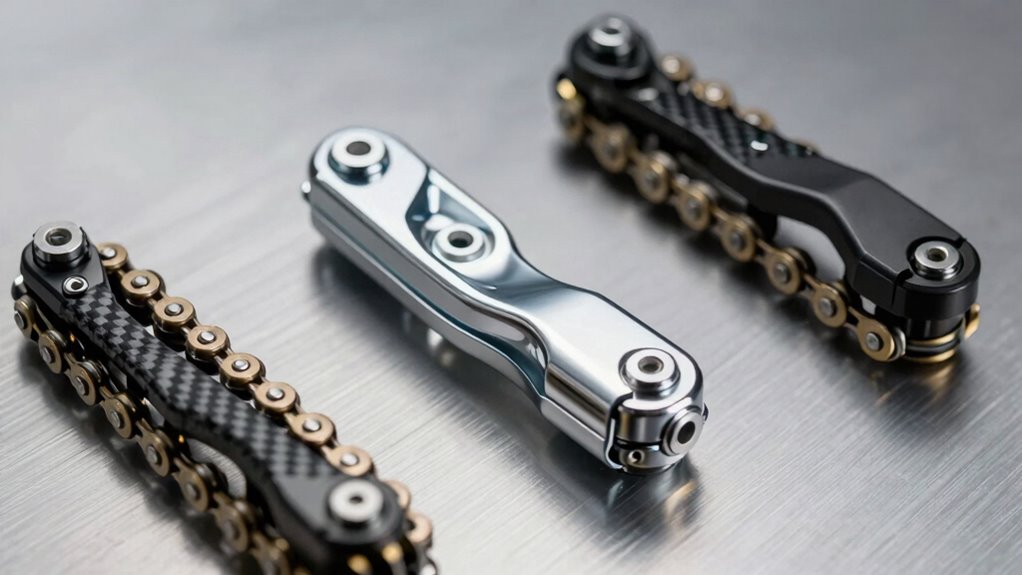
You need reliability when the terrain gets tough, and these four tensioners deliver. The Tlswshsy model keeps your ATV or tractor steady in snow and mud with durable stainless steel and a quick bungee system.
BBTO’s rubber tensioners fit light trucks perfectly, resisting cracks in harsh winters. For BMX riders, the SE BIKES aluminum unit offers tool-free adjustments and elite drivetrain protection.
If you’re riding a Polaris ATV, the OEM-matched tensioner guarantees smooth performance across years of trail abuse. Each pick boosts control and cuts slippage—discover which one fits your ride next.
Quick Overview
- Tlswshsy Tire Chain Tensioners offer durable stainless steel construction and universal fit for ATVs, tractors, and snow blowers.
- BBTO 4 Pcs Truck Tire Traction Chains include rubber tensioners with iron hooks for stable grip on 16–19.5-inch light truck and SUV wheels.
- SE BIKES SE Chain Tensioner provides tool-free, quick adjustment for 3/8-inch BMX and single-speed bike chains with lightweight aluminum durability.
- Polaris ATV Chain Tensioner (2004–2020) ensures precise OEM-compatible performance for models like RZR 170 and Sportsman 110 EFI.
- Choose tensioners based on use case: bungee for occasional off-road, mechanical for precision, and corrosion-resistant types for harsh conditions.
| Tire Chain Tensioners for Snow Blowers |  | Best Overall | Use Case: Tire chain tensioning for vehicles | Compatibility: Universal fit for UTVs, ATVs, tractors, snowblowers | Material: Stainless steel | VIEW LATEST PRICE | Read Our Analysis |
| BBTO 4 Pcs Truck Tire Traction Chains |  | Heavy-Duty Choice | Use Case: Tire chain tensioning for trucks/SUVs | Compatibility: Universal fit for light trucks and SUVs (16–19.5 in wheels) | Material: Rubber body with iron hooks | VIEW LATEST PRICE | Read Our Analysis |
| SE BIKES SE Chain Tensioner |  | Top Pick for Bikes | Use Case: Bicycle chain tensioning | Compatibility: 3/8-inch chains (BMX, single-speed bikes) | Material: Aluminum alloy | VIEW LATEST PRICE | Read Our Analysis |
| Chain Tensioner for Polaris ATV (2004-2020) |  | OEM-Reliable Fit | Use Case: ATV drive chain tensioning | Compatibility: Specific Polaris ATV models (2004–2020) | Material: Not specified | VIEW LATEST PRICE | Read Our Analysis |
More Details on Our Top Picks
Tire Chain Tensioners for Snow Blowers
If you’re using tire chains on your snow blower and want to prevent them from loosening or shifting during use, the Tlswshsy Tire Chain Tensioners are your best bet in 2026. You’ll install them easily by pulling slack toward the hub with the bungee system.
They’re built from stainless steel with crimped metal hooks for durability. They fit snow blowers, tractors, ATVs, and more.
They work in snow, ice, mud, and sand. The universal design keeps chains tight, boosting their lifespan.
Weighing just 14.8 ounces, they’re lightweight yet strong. You get one pair per pack.
They’ve been available since 2022 and rank highly on Amazon. You can return them within 30 days.- Use Case:Tire chain tensioning for vehicles
- Compatibility:Universal fit for UTVs, ATVs, tractors, snowblowers
- Material:Stainless steel
- Quantity Included:1 pair (2 pieces)
- Installation Type:Hook-and-bungee tension system
- Product Focus:Extend tire chain life
- Additional Feature:Stainless steel construction
- Additional Feature:Universal fit design
- Additional Feature:Extends chain lifespan
BBTO 4 Pcs Truck Tire Traction Chains
The BBTO 4 Pcs Truck Tire Traction Chains are a solid pick for light truck and SUV owners who need reliable chain tensioners that hold up in tough winter conditions. You get 4 rubber tensioners with iron hooks that fit 16 to 19.5-inch wheels—easy to install and designed to keep your chains snug.
They boost chain life and stay secure in snow, ice, or rough terrain. Lightweight and built to last, they handle harsh weather without cracking.
Just hook them into your anti-slip chains for a steady ride. It’s a simple fix that makes a real difference.
Backed by Amazon’s 30-day return policy, they’re a low-risk upgrade for safer winter driving.- Use Case:Tire chain tensioning for trucks/SUVs
- Compatibility:Universal fit for light trucks and SUVs (16–19.5 in wheels)
- Material:Rubber body with iron hooks
- Quantity Included:4 pieces (2 pairs)
- Installation Type:Hook into chain’s iron hook
- Product Focus:Maintain secure chain fit in harsh conditions
- Additional Feature:Rubber body with iron hooks
- Additional Feature:Increased elasticity for durability
- Additional Feature:Simplified fast fitting process
SE BIKES SE Chain Tensioner
You’ll get the best results from the SE Bikes SE Chain Tensioner 2.0 if you ride a BMX or single-speed setup that demands reliable chain retention under tough conditions. You’ll appreciate its lightweight aluminum alloy build—it’s durable, corrosion-resistant, and keeps weight low.
Measuring 3.94 x 1.97 x 3.94 inches and weighing just 0.07 kg, it’s compact and easy to mount. You can adjust tension quickly without tools, keeping your 3/8-inch chain tight and slap-free.
It’s ideal for street, park, or trail riding, reducing derailment risks and extending drivetrain life. Ranked #1 in bike chain tension idlers, this black aluminum model delivers consistent performance when you push hard.- Use Case:Bicycle chain tensioning
- Compatibility:3/8-inch chains (BMX, single-speed bikes)
- Material:Aluminum alloy
- Quantity Included:1 piece
- Installation Type:Tool-free, adjustable mounting
- Product Focus:Prevent chain slap and derailment
- Additional Feature:Tool-free quick adjustments
- Additional Feature:Reduces chain slap
- Additional Feature:Lightweight aluminum alloy
Chain Tensioner for Polaris ATV (2004-2020)
Though your Polaris ATV handles rugged terrain with ease, maintaining proper chain tension is critical—especially for models from 2004 to 2020 like the Sportsman 90, RZR 170, or Outlaw 110 EFI. You’ll want the right chain tensioner—OEM part numbers 0452954 or 0451686—to guarantee smooth performance.
It fits models like the Predator 90 (2004–2006), RZR 170 (2009–2013), and Sportsman 110 EFI (2016–2020). The package includes one tensioner, so verify compatibility using your model, year, and OEM number.
Got questions? Email the seller—they’ll help with issues or warranty concerns and stand by quality.- Use Case:ATV drive chain tensioning
- Compatibility:Specific Polaris ATV models (2004–2020)
- Material:Not specified
- Quantity Included:1 piece
- Installation Type:OEM-style replacement installation
- Product Focus:Drive chain tension maintenance
- Additional Feature:OEM part number verified
- Additional Feature:Model-specific compatibility
- Additional Feature:Email support available
Factors to Consider When Choosing Chain Tensioners
You’ll want to check material quality first—stronger materials handle stress better and last longer. Make sure the tensioner fits your model, because even the best unit won’t work if it’s not compatible.
Look for easy installation, reliable adjustment, and solid performance in tough conditions.
Material Quality
Durability starts with smart material choices. You need corrosion-resistant metals like stainless steel or aluminum alloys for frames and hooks—these won’t rust, even in wet, salty, or snowy conditions.
For elastomer parts, pick rubber or synthetic rubber with high tensile strength and solid elasticity; check rated elongation and tensile values so they rebound reliably. Examine how hooks and connectors are built: crimped or welded joints should be heat-treated or reinforced to resist bending and survive repeated stress.
Don’t skip hardness ratings—use Rockwell for metals and Shore A for elastomers—to keep materials tough but flexible. You don’t want parts cracking in cold weather or stretching out in heat.
Also, consider weight and material gauge. Thicker wires or walls last longer, but make sure your mounting points can handle the added stress.
Smart specs now mean fewer failures later.
Compatibility Check
When picking a chain tensioner, start by matching it to your chain’s pitch and width—whether it’s a 3/8″ bike chain or a heavy-duty truck snow chain—so it engages correctly and adjusts within the right range. You’ll also need to check the wheel or rim diameter and tire size it supports, since ATVs, light trucks, and bikes require different hook spacing and arm lengths.
Make sure the mounting method—hooked bungee, rubber tightener with iron hooks, or bolt-on OEM style—works with your chain or axle without modifications. Don’t forget material suitability: go for stainless steel or aluminum in wet or snowy conditions, or durable rubber for stretch and grip.
Finally, confirm if it’s a universal fit or meant for specific OEM models, and always double-check part numbers or specs against your setup to avoid mismatched parts and mid-ride failures.
Ease of Installation
While getting your chain tensioner installed quickly and correctly matters, it’s the little design details that make the biggest difference. You’ll save 2–10 minutes per wheel with tool-free models—no extra wrenches or bolts to fumble with.
Always match the hook type, like crimped metal or clip-style, to your chain link so you skip makeshift fixes that slow you down. Look for clearly labeled parts and bidirectional instructions; they help you install confidently, even in the dark or cold.
Pick a tensioner with broad adjustability or stretch so it fits your wheel size without constant re-routing. Opt for ones with a single, central tensioning action—pulling slack toward one hub—to evenly tighten fast and avoid uneven wear.
These features aren’t luxuries; they’re what keep your setup smooth, reliable, and ready to roll in minutes, not frustration.
Durability in Conditions
Even in the harshest conditions, your chain tensioner must hold up without wearing out or failing. You need materials like stainless steel, aluminum alloys, or UV-stabilized synthetic rubbers to resist rust and degradation in wet, salty, or snowy environments.
Always check tensile strength and elasticity—higher ratings keep tension stable through load cycles and temperature shifts. Reinforced attachment points, like crimped or welded hooks and solid eyelets, should be rated for shock loads to survive sudden slips or impacts.
Consider the full temperature range and UV/ozone resistance of polymer parts; cold can make rubber brittle, while heat and sun exposure lead to cracking. Inspect for fatigue-resistant designs and ask for manufacturer fatigue-life data when possible—repeated stress and vibration are the main causes of long-term failure, and you can’t afford a weak link when the ride gets rough.
Tension Adjustment
Getting the right chain tension matters, and your tensioner should let you fine-tune slack to hit the sweet spot—usually between 1/4″ and 3/4″ of vertical play. You’ll want tool-free or quick-adjust features like thumb screws or spring-loaded cams so you can tighten on the fly without removing the wheel.
Make sure the tensioner offers enough take-up range—at least a few centimeters—to handle chain stretch over time. Look for models with positive locking mechanisms or indexed settings to prevent slip under vibration and keep preload steady.
Don’t overlook durability: adjustment parts like threads, springs, and fasteners must resist corrosion and hold firm in rough conditions. A weak mechanism means constant readjusting.
Choose a tensioner that keeps tension where you set it, without drifting. You need reliability, not guesswork.
Use Case Alignment
Since your chain tensioner needs depend on how and where you use your vehicle, pick a type that matches your demands—bungee or rubber tensioners work well for off-road grip on trailers or ATVs with occasional use, while mechanical adjusters deliver the precision needed for bikes or performance machines with fixed chainlines. You’ll want heavy-duty, corrosion-resistant models if you’re tackling snow, mud, or farm work, but lighter builds suit passenger or weekend trail use.
Always check that the tensioner fits your chain size and wheel diameter to prevent slippage. If you’re adjusting tires often, go for quick, tool-free options you can install roadside.
For permanent setups, bolt-on types offer more stability. Bungee and rubber versions are low-maintenance but may wear faster in extreme conditions, so inspect them regularly.
Metal mechanical units last longer but need occasional lube and checks—pick what fits your real-world use.
Frequently Asked Questions
How Often Should I Check My Chain Tensioner?
You should check your chain tensioner every 100 miles or after hard rides. It only takes a minute and keeps your drivetrain running smoothly.
Don’t wait—catching it early prevents wear, noise, and potential breakdowns on the trail or road.
Can Chain Tensioners Be Reused After Removal?
60% of riders reuse parts without checking wear—don’t be one. You can reuse chain tensioners after removal, but only if they’re not cracked, corroded, or worn.
Inspect them thoroughly; a damaged one fails faster and risks your ride’s performance and safety—when in doubt, replace it.
Do Chain Tensioners Work on All Bike Types?
No, they don’t work on all bike types. You’ll need to check your bike’s frame design and drivetrain setup because some tensioners fit only specific derailleur or single-speed systems.
Always verify compatibility before buying.
Are Chain Tensioners Necessary for Indoor Motorcycles?
No, you don’t need chain tensioners for indoor motorcycles—they’re silent guardians, but your bike’s chain stays put like a cat napping in sunlight, snug and steady without extra help keeping it in line.
What Tools Are Needed to Install a Chain Tensioner?
You’ll need a wrench, Allen keys, torque wrench, measuring tape, and rubber mallet. Loosen axle nuts, adjust tensioner bolts, measure chain slack, then tighten securely.
Don’t forget safety gear—gloves and goggles protect you while you work. Double-check alignment before riding.
Conclusion
You’ve seen the best—now isn’t it time your ride felt as smooth as it looks? From rugged trucks to nimble bikes, the right chain tensioner keeps you moving without a second thought.
Don’t let slack chains slow you down; take control with gear that works as hard as you do. After all, isn’t a worry-free journey the real destination?