2 Best Clip-In Shoes for 2026 That Cyclists Love
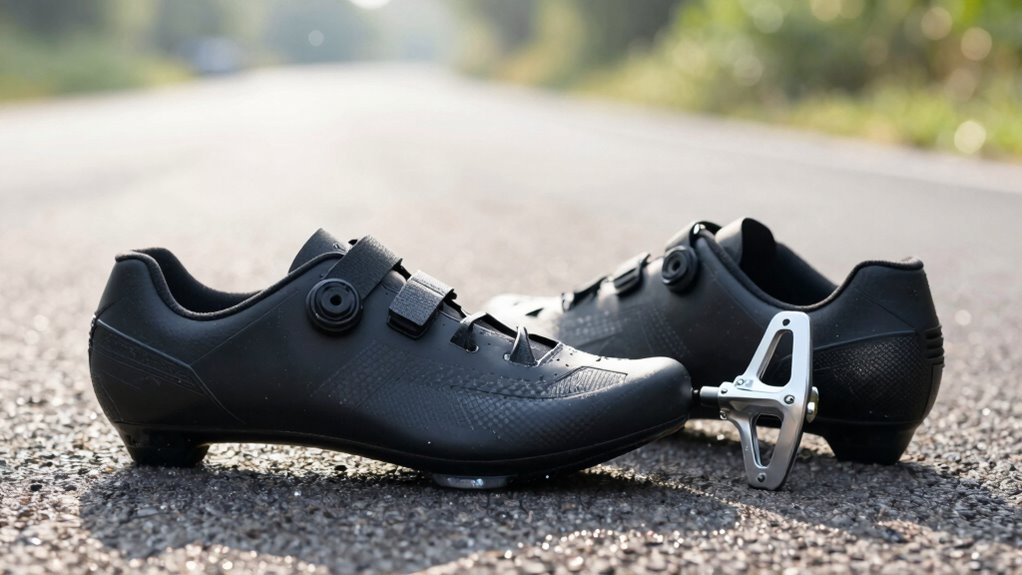
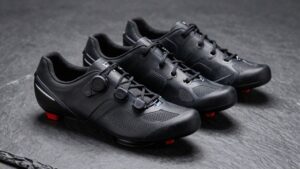
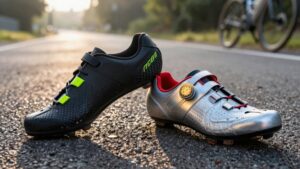
You’ll love the Crankbrothers Mallet Trail Lace for its snug fit, durable build, and excellent walkability, perfect for tough trails. Pair it with the Giro Rincon—lightweight, with a responsive BOA® dial and versatile cleat compatibility.
Both offer great support, breathability, and grip when you need it most. Cyclists trust them for stiffness, comfort, and reliability on mixed terrain.
Find out which one fits your ride style and terrain demands best.
Quick Overview
- Crankbrothers Mallet Trail Lace offers rugged durability, secure fit, and excellent walkability ideal for aggressive trail riding.
- Giro Rincon features BOA® L6 precision closure, glass-fiber reinforced sole, and dual cleat compatibility for versatile performance.
- Snug heel retention and contoured footbeds ensure comfort and reduce hotspots during long rides.
- Stiff yet flexible soles balance power transfer and trail adaptability, enhancing control on varied terrain.
- Reflective accents and high-visibility elements improve safety, especially in urban or low-light conditions.
| Crankbrothers Unisex Adult Mallet Trail Lace Cycling Shoes |  | Best for Trail Adventures | Closure System: Lace closure | Intended Use: Trail riding | Target Gender: Unisex | VIEW LATEST PRICE | Read Our Analysis |
| Giro Rincon Cycling Shoe – Men’s |  | Top Value Pick | Closure System: BOA® L6 dial and strap | Intended Use: Cycling | Target Gender: Men’s | VIEW LATEST PRICE | Read Our Analysis |
More Details on Our Top Picks
Crankbrothers Unisex Adult Mallet Trail Lace Cycling Shoes
You’ll love the Crankbrothers Unisex Adult Mallet Trail Lace Cycling Shoes if you’re an adventure-driven rider who tackles rough trails and demands durability without sacrificing comfort. You get a rugged, reliable build that handles technical terrain with confidence, whether you’re clipping in on climbs or hiking your bike over obstacles.
The lace closure gives you a snug, adjustable fit that stays secure, and they’re comfortable enough for long rides. You’ll appreciate the balance of performance and protection, making them ideal for trail riders who want versatility without compromise.
These shoes keep up when the ride gets tough.- Closure System:Lace closure
- Intended Use:Trail riding
- Target Gender:Unisex
- Sole Material:Not specified
- Compatibility:Clip-in system
- Durability Features:Rugged durability for challenging terrain
- Additional Feature:Lace closure for micro-adjustability
- Additional Feature:Built for technical trail confidence
- Additional Feature:Adventure-focused rugged durability
Giro Rincon Cycling Shoe – Men’s
Designed for cyclists who want pro-level performance without the pro-level price, the Giro Rincon Cycling Shoe – Men’s delivers stiff, efficient power transfer and reliable clip-in precision. You get a lightweight Synchwire upper that’s vented and durable, plus a BOA® L6 dial for quick, on-the-fly micro-adjustments.
The injection-molded nylon sole, reinforced with glass fiber, guarantees solid power transfer and works with both 2-bolt and 3-bolt cleats. Rubber outsole pads offer great grip, while reflective details boost your visibility.
A 3D molded footbed supports comfort mile after mile. It’s a top pick for riders who demand performance, fit, and value—all in one sleek, modern package.- Closure System:BOA® L6 dial and strap
- Intended Use:Cycling
- Target Gender:Men’s
- Sole Material:Nylon reinforced with glass fiber
- Compatibility:Universal 3/2 cleat bolt pattern
- Durability Features:Aggressive dual-injected rubber outsole resists delamination
- Additional Feature:BOA® L6 dial lifetime guarantee
- Additional Feature:Reflective details for low-light visibility
- Additional Feature:3D molded supportive footbed comfort
Factors to Consider When Choosing Clip-In Shoes
You need a snug fit and comfortable feel to stay pain-free on long rides. Pick a closure system—like straps or laces—that’s quick and easy to adjust.
Make sure the sole stiffness, pedal compatibility, and build quality match your riding style and needs.
Fit and Comfort
While a perfect fit starts with accurate sizing, it’s the details—like a snug heel cup and minimal fore-aft movement—that keep your feet comfortable and efficient. You’ll want heel lift under 5–8 mm to avoid hotspots and power loss.
Choose the right width and volume for your foot—narrow, regular, or wide—so you don’t endure numbness or discomfort on long rides. Make sure the shoe offers proper arch support or accepts custom insoles; a contoured footbed boosts comfort over hours in the saddle.
Look for breathable uppers and moisture-wicking linings—they minimize blisters and keep your feet drier. While closure types vary, pick a shoe that supports fine-tuning across the midfoot and forefoot.
You’re aiming for even pressure without tight spots. Prioritize these fit and comfort elements, and you’ll pedal farther, stronger, and with fewer aches.
Closure System Type
When it comes to dialing in your fit, the closure system makes a real difference in both performance and convenience. You want something that keeps your foot secure without hotspots or slip.
Lace-ups give you even tension and walkability but aren’t quick to adjust mid-ride. Boa dials let you fine-tune tightness in 1 mm clicks and release instantly—ideal for on-the-fly changes.
Velcro straps are lightweight and simple, though they stretch over time and lack precision. Ratchet buckles offer strong, one-handed control but add bulk and weight, making off-bike hikes awkward.
Many riders like hybrids—say, a Boa over the midfoot and a strap up front—to get snug support and toe-box comfort. Each system has trade-offs, so you’ll pick based on how you ride, how often you adjust, and whether you value walkability or all-out rigidity.
Sole Stiffness Level
A good closure system locks your foot in place, but it’s the sole’s stiffness that determines how much of your effort actually reaches the pedals. You want a stiff sole if you’re racing or pushing hard—carbon soles (rated 7–12) maximize power transfer by reducing flex.
But if you’re touring or doing long rides with walking, go for softer nylon or composite soles; they’re more comfortable and absorb road buzz. Mountain bikers need a balance—moderate stiffness gives solid power transfer while letting the sole flex slightly on rough trails.
Too much stiffness without proper fit can cause numbness or hot spots, especially if you’re not dialed in. Remember, stiffer soles amplify cleat misalignment or poor arch support, so nail your bike fit.
Match sole stiffness to your riding style—power for sprinters, comfort for adventurers.
Pedal Compatibility
Since your shoes need to work with your pedals, start by matching the cleat bolt pattern—2-bolt for mountain bike systems and 3-bolt for road—to guarantee they’ll attach securely. You’ll also want to check that the sole stiffness and mounting area align with your pedal type, since stiff road soles usually use 3-bolt setups while grippy, recessed MTB soles favor 2-bolt.
Make sure the shoe’s cleat recess and tread let you walk comfortably when you’re off the bike, especially with trail or commute-focused systems. Don’t overlook plate reinforcement—your shoes must handle the torque and repeated stress of clipping in and out without stripped threads or cleat pull-out.
If you switch between pedal types, grab shoes with universal plates or adapters that support both 2-bolt and 3-bolt cleats. This way, you stay flexible without sacrificing performance.
Durability and Build
You’ve matched your shoes to your pedals—now make sure they hold up mile after mile. Inspect the sole: glass-fiber or carbon-reinforced plates resist flex and creasing better than plain nylon, keeping your pedal connection solid under hard efforts.
Choose over-molded rubber or bonded lugged outsoles—they fight off delamination and tread wear far longer than glued-on, low-density rubber. Reinforced toe and heel boxes paired with abrasion-resistant uppers, like ripstop textiles or thermally bonded layers, handle trail scrambles and off-bike hikes without fraying.
Don’t overlook the closure system; sealed dials, metal-reinforced lace guides, or straps with double stitching outlast flimsy plastic buckles or weak hook-and-loop. Finally, pick shoes with stainless or coated hardware and rustproof cleat plates—wet rides won’t wreck them.
These details add up, keeping your shoes strong and safe, no matter how rough the ride gets.
Ventilation and Weight
Keep your feet cool and your stride light by prioritizing ventilation and weight in your clip-in shoes. Choose uppers with large mesh panels or perforations—they boost airflow and cut internal humidity on long rides.
More vents usually mean lighter shoes, swapping heavy materials for breathable ones and shedding 50–150 grams per pair. But don’t sacrifice support for breathability; check that thin linings and insoles still offer stiffness for efficient power transfer.
Vent placement matters: look for openings over the tongue and forefoot, plus sole channels that actively move air across your foot. Avoid random perforations with little airflow coordination.
Balance ventilation with conditions—overbuilt breathability can let in cold and moisture when the weather turns. Match your shoe’s airflow to the climate you ride in most.
Light, cool, and well-supported beats sweaty, heavy, or flimsy every time.
Traction and Grip
Light and airy shoes keep you cool on the fly, but once you unclip and hit uneven ground, traction becomes just as important. You need a tread pattern with deep, soft rubber—lower durometer compounds grip better on wet or loose terrain.
Look for multi-directional lugs or hexagonal outsole designs; they bite into dirt and shed mud efficiently. Aggressive rubber pads at the heel and toe boost your footing on rocks or slippery roots, giving you confidence with every step.
Keep in mind the stiffness trade-off: ultra-stiff soles power your pedals but limit flex, reducing grip on sketchy surfaces. Moderately flexible soles conform better, enhancing contact and control.
Also, choose shoes with drainage channels—they clear water and mud fast, keeping your grip consistent when the trail turns sloppy.
Style and Visibility
While performance matters most, how you’re seen on the road or trail can be just as critical. You boost your safety by choosing bright, high-contrast, or fluorescent shoe panels that stand out in low light.
Avoid plain dark finishes—they make you harder to spot. Add reflective accents at the heel and outer ankle to catch headlights from the side and rear.
These details matter when you’re cornering or stopped at intersections. Don’t overlook your whole pedal/shoe system—bright cleat covers or reflective pedal stripes keep your feet visible even when clipped in.
Match your shoe’s visibility features to your usual terrain: urban riders need maximum reflectivity, while trail riders might prioritize subtle accents with splash of flair. You stay safer when drivers and other cyclists see you early.
Style doesn’t have to sacrifice function—smart visibility choices keep you looking good and riding safely.
Frequently Asked Questions
Can I Use Clip-In Shoes for Walking?
You can walk in clip-in shoes, but you’re gonna regret it—those stiff soles and protruding cleats make every step awkward and slippery. They’re built for pedals, not pavement, so save your soles and bring proper shoes if you plan to walk much.
Are Clip-In Shoes Compatible With All Pedals?
No, they’re not. You’ve got clip-in shoes on one side, universal pedals on the other—mismatched, awkward, stuck.
You’ll need matching cleats and pedals. You can’t just swap systems.
They’ve got standards—Look, SPD, SPD-SL—so check compatibility. You don’t want slips or snaps mid-ride.
How Do I Clean My Cycling Shoes?
You clean your cycling shoes by wiping off dirt with a damp cloth, using mild soap and a soft brush for stains, then air-dry them away from direct heat—never toss them in the washing machine or soak the soles.
Do Clip-In Shoes Come in Wide Sizes?
Yes, clip-in shoes come in wide sizes, and you’ll find several brands offer them. You can check Sidi, Giro, or Shimano—they make wide models so your feet stay comfortable during long rides.
You won’t have to sacrifice fit or performance.
Can I Wear Normal Socks With Clip-In Shoes?
You can wear normal socks with clip-in shoes, but why limit yourself? Thin performance socks offer better fit, breathability, and control—don’t you want every advantage on the ride?
Conclusion
You’re flying down the trail, sunlight slicing through trees, feet locked in like they’re part of the bike. The clicks are crisp, the grip sure.
With every pedal stroke, you feel it—power, precision, freedom. These shoes aren’t just gear; they’re your edge.
Whether you’re lacing into the Mallet or stepping into the Rincon, you’re not just riding—you’re alive, moving, conquering. This is cycling, elevated.