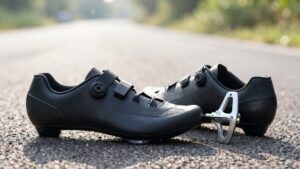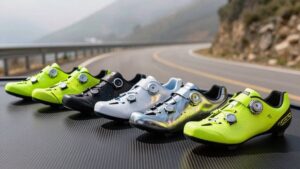
2 Best Cycling Shoes for 2026 That Road Bikers Rave About
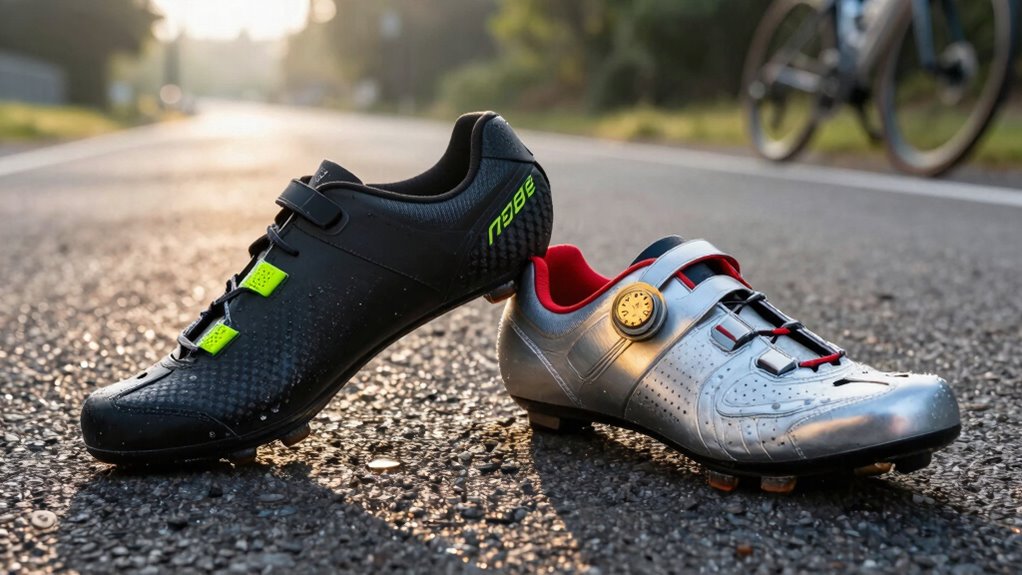
You’re going to love the Giro Stylus and Giro Rincon — road bikers rave about them in 2026 for nailing comfort, performance, and durability. The Stylus gives you secure fit, triple straps, and a stiff outsole, while the Rincon delivers quick BOA adjustments and lightweight efficiency.
Both offer great ventilation, solid power transfer, and handle long rides with ease. See how they stack up in key features to find your perfect match.
Quick Overview
- Giro Stylus delivers reliable performance with a stiff nylon-glass sole, triple hook-and-loop straps, and Synchwire upper for support and breathability.
- Giro Rincon stands out with BOA® L6 dial precision, lightweight composite sole, and 3D footbed for all-day comfort on long road rides.
- Both models feature stiff soles for efficient power transfer, scoring high in durability and ventilation for demanding road cyclists.
- Snug fit with secure heel lock and ample toe space ensures comfort over long distances and varying terrain.
- Reinforced construction, sealed sole-to-upper bonds, and abrasion-resistant toe pads enhance longevity and weather resistance.
| Giro Stylus Cycling Shoe – Men’s |  | Best Value Pick | Upper Material: Synchwire single-piece | Outsole Material: Injection-molded nylon and glass fiber | Cleat Compatibility: Universal 3/2 cleat bolt pattern | VIEW LATEST PRICE | Read Our Analysis |
| Giro Rincon Cycling Shoe – Men’s |  | Premium Performance | Upper Material: Synchwire composite | Outsole Material: Injection-molded nylon reinforced with glass fiber | Cleat Compatibility: Universal 3/2 cleat bolt pattern | VIEW LATEST PRICE | Read Our Analysis |
More Details on Our Top Picks
Giro Stylus Cycling Shoe – Men’s
You’ll get a locked-in, supportive fit with the Giro Stylus thanks to its Synchwire single-piece upper—it molds to your foot while delivering ventilation and structure, making these shoes a top pick for riders who want comfort without sacrificing performance. You’ll tighten and fine-tune the fit with three compression-molded hook-and-loop straps for consistent support.
The injection-molded nylon and glass fiber outsole gives you efficient power transfer and works with any 3/2 bolt cleat. Over-molded heel and toe pads boost durability and protect against wear, so you stay confident on rough terrain or long rides.- Upper Material:Synchwire single-piece
- Outsole Material:Injection-molded nylon and glass fiber
- Cleat Compatibility:Universal 3/2 cleat bolt pattern
- Heel and Toe Protection:Over-molded heel and toe pads
- Closure Type:Three hook-and-loop straps
- Ventilation:Provides ventilation
- Additional Feature:Three hook-and-loop straps
- Additional Feature:Single-piece Synchwire upper
- Additional Feature:Injection-molded nylon outsole
Giro Rincon Cycling Shoe – Men’s
The Giro Rincon Cycling Shoe – Men’s is built for riders who demand efficient power transfer and reliable comfort without breaking the bank. You get a stiff, lightweight nylon-glass composite sole that boosts pedaling efficiency, paired with a Synchwire stitch-less upper for breathability and durability.
The BOA® L6 dial delivers quick, precise micro-adjustments, while the forefoot strap guarantees a secure fit. You’ll appreciate the 3D molded footbed for all-day comfort and the aggressive rubber outsole for reliable traction.
It’s compatible with both 2-bolt and 3-bolt cleats, and reflective details help keep you visible in low light.- Upper Material:Synchwire composite
- Outsole Material:Injection-molded nylon reinforced with glass fiber
- Cleat Compatibility:Universal 3/2 cleat bolt pattern
- Heel and Toe Protection:Over-molded rubber heel and toe pads
- Closure Type:BOA® L6 dial and forefoot strap
- Ventilation:Vented upper
- Additional Feature:BOA L6 dial closure
- Additional Feature:Reflective visibility details
- Additional Feature:3D molded footbed support
Factors to Consider When Choosing Cycling Shoes for Road Bikes
You need a snug fit that feels comfortable from the first ride, so don’t overlook how the shoe molds to your foot. Your choice of closure—whether it’s laces, straps, or a Boa dial—affects both comfort and ease of adjustment.
Make sure the upper material breathes well, the outsole is stiff enough for efficient power transfer, and the shoe works with your pedal’s cleat system.
Fit and Comfort
While a perfect fit might seem subtle, it’s what transforms your ride—ensure your heel and midfoot are held snugly with minimal slip, limiting heel lift to under 5 mm to avoid hotspots and wasted power. Your road shoes should feel slightly narrower than casual kicks, with 5–10 mm of space at the toes for swelling—enough to prevent numbness but not so much you lose pedal control.
Don’t overlook the insole; a contoured or 3D-molded footbed that matches your arch cuts pressure points and boosts comfort over long miles. Pair that with a stiff sole to maximize power transfer, and you’re set.
Keep your feet cool with breathable uppers, perforations, and moisture-wicking liners—critical for rides over an hour. These details keep blisters at bay and help you stay focused on the road, not your feet.
Closure System Type
Dial in your perfect fit with a closure system that matches your ride style. Choose Boa dials for micro-adjustability—just twist for 1 mm precision and release instantly, eliminating pressure points on long climbs.
If you value simplicity, hook-and-loop straps offer lightweight, secure closure with quick adjustments mid-ride, especially with triple-strap setups that evenly compress the forefoot. Prefer rugged feedback?
Ratchet buckles lock in tension securely under load and last for years, though they add slight weight. For low-profile comfort on casual spins, elastic slip-ons slash weight and hassle but limit customization, making them better for touring than racing.
Most high-performance 2026 models now pair a Boa dial at the midfoot with a single front strap—giving you locked-down power transfer and adaptable forefoot space. Match your closure to your priorities: precision, speed, durability, or minimalism.
Upper Material Quality
Since comfort and performance start with the shoe’s foundation, focus on uppers built with thermo-bonded or seamless synthetic materials—they eliminate stitch-related hot spots and hold up longer under stress. You’ll stay cooler and more comfortable when your shoes use breathable mesh or mono-filament panels that boost airflow and cut weight.
Don’t overlook stability—internal non-woven or reinforced layers keep the upper from bulging, so power transfers efficiently with every pedal stroke. Synthetic materials like PU or microfiber outperform leather by resisting water, maintaining shape, and requiring less upkeep.
Look for over-molded toe and heel zones, too; they take constant abrasion from clip-ins and drops, increasing durability. You want an upper that stays snug, protective, and resilient mile after mile.
With the right materials, your feet stay comfortable, supported, and ready for hard efforts—all without sacrificing long-term wear.
Outsole Stiffness Level
Your foot stays secure and supported thanks to high-quality uppers, but how that power reaches the pedal hinges on the outsole’s stiffness. You’ll see stiffness rated from 1–10 or 1–12, with higher numbers meaning less flex and better power transfer.
Carbon fiber soles are stiff and light, ideal when you’re sprinting or climbing, while nylon composites offer a bit more flex for comfort on long, rough rides. Stiff soles boost efficiency, but they can create pressure hotspots—especially with thin outsoles—so pair them with supportive insoles.
If you’re not pushing hard frequently, a moderately stiff sole might treat your feet better. Keep in mind: ultra-stiff carbon saves weight but sacrifices some compliance.
Your choice depends on riding style, terrain, and comfort preference. Don’t overlook fit—no matter how stiff the sole, poor ergonomics kill performance.
Cleat Compatibility
While power transfer starts with your foot, it’s the cleat compatibility that locks you to the pedal and shapes your ride. Most road shoes use a 3-bolt (Look-style) pattern—it’s the standard for stability and power.
But if you ride mixed terrain, consider shoes with 2-bolt (SPD-style) or dual-pattern soles that accept both cleat types. Float matters too: choose 0°, 6°, or 9° based on your knee comfort and biomechanics.
Don’t ignore stack height—lower means better efficiency. Look for adjustable cleat plates that let you fine-tune fore/aft and lateral position for an ideal fit.
Stiff carbon or composite outsoles hold cleats securely but demand precise alignment to prevent hotspots. Match your shoe’s cleat system to your pedals, riding style, and joints—you’ll pedal smoother, longer, and with less strain.
Ventilation and Breathability
You’ll often feel the difference on long summer rides—well-ventilated shoes keep your feet cool and dry. Look for mesh uppers or laser-cut perforations that boost airflow and cut sweat buildup, lowering blister risk.
Shoes with large, smartly placed vents—especially on the toe box and tongue—cool better in hot weather. Avoid thick leather or solid synthetic uppers; they trap heat and moisture.
If you ride in warm climates, pick models with high-vent surface area or engineered mesh panels. Your sock choice matters, too: wear moisture-wicking types to move sweat away from skin.
Also, make certain a snug but not tight fit—tight shoes block airflow. Remember, maximum breathability works best in dry, hot conditions.
Over-ventilated shoes won’t protect against wind, water, or cold. Balance venting with your climate needs for all-day comfort.
Durability and Protection
Staying cool matters, but so does lasting season after season. You need shoes that handle constant pedaling forces without breaking down.
Look for outsoles with rigid nylon or carbon mixed with reinforced fibers like glass—this combo keeps stiffness over time and resists cracking. Over-molded rubber or thermoplastic on heels and toes guards against abrasion, so scuffs won’t ruin your stride.
Seamless or thermobonded uppers eliminate weak seams, boosting resilience under flex and weather. Don’t overlook closures: micro-adjust dials, strong straps, or durable hook-and-loop outlast frayed alternatives.
Closure failure often kills shoes early, so quality here matters. Check sole-to-upper bonds—strong, sealed interfaces block moisture and dirt.
Reinforced toe caps and tough ventilation mesh also help. Poor seals and flimsy mesh wear fast.
Pick smart details, and your shoes won’t quit when you need them most.
Frequently Asked Questions
How Do I Clean My Cycling Shoes Properly?
You clean your cycling shoes by wiping off dirt with a damp cloth, using a soft brush for stubborn grime, removing the insoles and washing them separately, then air-drying them away from direct heat to keep them fresh and functional.
Can I Walk Long Distances in Road Cycling Shoes?
You’ll feel like a flamingo on concrete—awkward and unbalanced. You *can* walk long distances in road cycling shoes, but honestly, they’re built for pedaling, not pacing.
Your feet will ache, and the stiff soles will make every step a battle. Just bring spare shoes.
Are Cycling Shoes True to Size?
They’re usually true to size, but you can’t rely on that alone. You’ve gotta try them on since fits vary by brand and model.
Don’t skip sizing charts or reviews—they’ll save you pain and hassle when you’re breaking in a new pair.
Do Cycling Shoes Come With a Warranty?
Yes, they do—like the time Sarah’s sole peeled after ten months, and Shimano replaced it free. Most brands offer 1-2 year warranties, so you’re covered if defects strike.
Just keep your receipt—it’s your safety net.
Can I Use MTB Pedals With Road Cycling Shoes?
Yes, you can use MTB pedals with road cycling shoes if the shoes have a 2-bolt cleat system. Just swap the cleats, tighten them well, and you’re set to clip in smoothly and ride without hassle.
Conclusion
You’re flying down a sun-drenched road, wind whispering past your ears, when your feet feel effortlessly one with the pedals. The Giro Stylus grips firm, while the Rincon breathes like a cool mountain stream.
You glance down—perfect alignment, no hot spots, just smooth power. It’s like the shoes knew your ride before you did.
Coincidence? Maybe.
But so does the perfect fit, the crisp shift, and that unshakable sense of flow.