7 Best Enduro Full Face Bike Helmets for 2026 (Riders Trust)
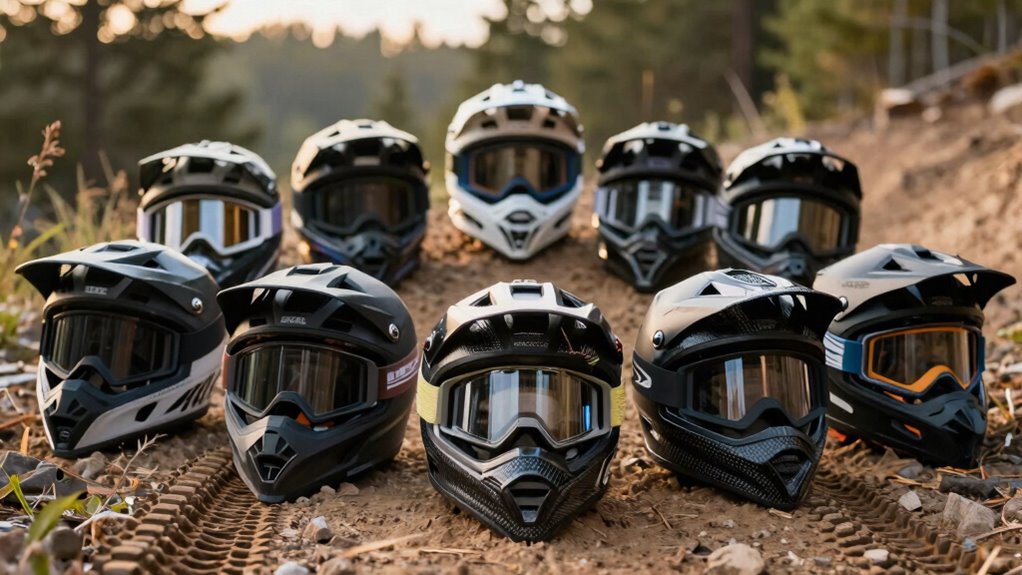
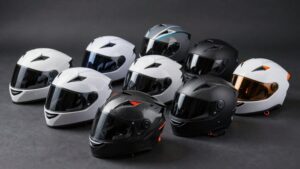
You want solid protection without the bulk, and these 7 enduro full-face helmets deliver. The POC Otocon offers lightweight coverage with a breakaway peak.
Demon United Podium X uses MIPS for rotational impact defense. Leatt MTB 3.0 gives 3-in-1 versatility.
BATFOX and Lixada balance safety and airflow. Bell Sanction 2 and Mongoose Title bring durable, certified performance.
You get ventilation, goggle compatibility, and smart impact tech where it counts—ideal for tough trails and long climbs. There’s more to what makes each stand out.
Quick Overview
- The POC Otocon offers full-face protection with a breakaway peak and Race Lock fit system for downhill and enduro racing.
- Demon United Podium X features MIPS technology and 20+ vents, balancing safety and cooling for aggressive enduro riding.
- Leatt MTB 3.0 delivers 3-in-1 versatility with 360° Turbine impact protection in a lightweight 350 g design.
- BATFOX provides ASTM/CPSC/EN1078 certification, EPP collarbone buffer, and goggle compatibility in a 300 g lightweight package.
- Bell Sanction 2 combines a flying bridge visor, 14-vent airflow, and removable cheek pads for certified enduro and downhill performance.
| POC Otocon Cycling Helmet |  | Best Overall | Weight: 0.53 kg | Outer Material: PC | Certification: Approved for downhill and enduro racing | VIEW LATEST PRICE | Read Our Analysis |
| Demon United Podium X MIPS Full Face Helmet | 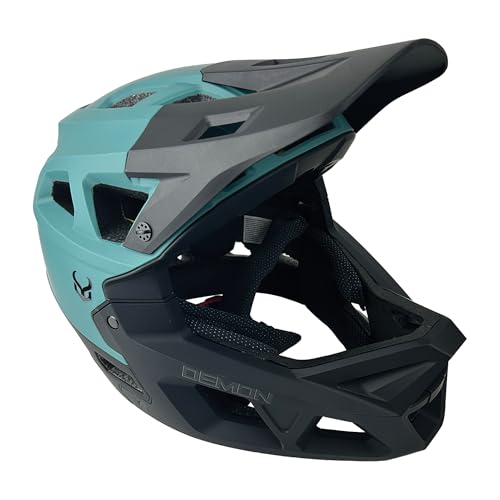 | Top Safety Tech | Weight: 710 grams | Outer Material: ABS plastic | Certification: Downhill rated; multiple certifications | VIEW LATEST PRICE | Read Our Analysis |
| Leatt MTB 3.0 Enduro Mountain Bike Helmet |  | Lightweight Design | Weight: 350 grams | Outer Material: Not explicitly stated | Certification: Not explicitly stated | VIEW LATEST PRICE | Read Our Analysis |
| BATFOX Full Face Mountain Bike Helmet |  | Best Value | Weight: 300 grams | Outer Material: PC | Certification: ASTM F1952, CPSC 16 CFR Part 1203, EN1078 | VIEW LATEST PRICE | Read Our Analysis |
| Lixada Full Face Mountain Bike Helmet |  | Budget-Friendly Pick | Weight: 700 g (medium) | Outer Material: PC | Certification: U.S. CPSC Safety Standard | VIEW LATEST PRICE | Read Our Analysis |
| Bell Sanction 2 |  | Editor’s Choice | Weight: 1 lb | Outer Material: Polycarbonate (PC) | Certification: US CPSC, ASTM Downhill, BMX | VIEW LATEST PRICE | Read Our Analysis |
| Mongoose Title Full Face Helmet | 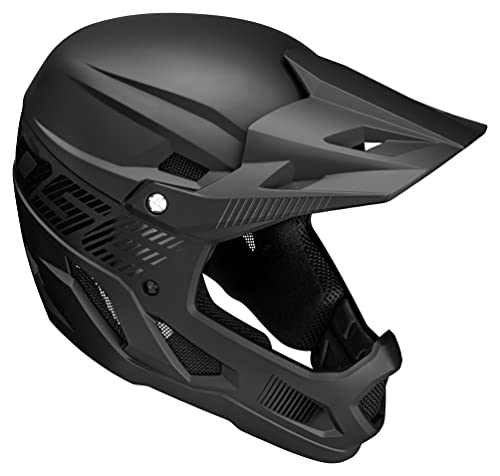 | Best For Beginners | Weight: 2.5 lb | Outer Material: ABS | Certification: U.S. CPSC, ASTM F1952 | VIEW LATEST PRICE | Read Our Analysis |
More Details on Our Top Picks
POC Otocon Cycling Helmet
If you’re an enduro rider who prioritizes lightweight protection without sacrificing safety, the POC Otocon Cycling Helmet stands out as a top choice. You get full-face coverage at just 0.53 kg, thanks to its polycarbonate shell and dual-material EPP/EPS liner.
The breakaway peak snaps off in a crash to reduce neck injury, and the GoPro-compatible design lets you mount your camera smoothly. You’ll stay cool with excellent ventilation and removable cheek pads.
Race Lock gives you a secure, adjustable fit. Certified for downhill and enduro racing, this helmet balances safety, weight, and airflow—perfect when every gram and every breath counts on long, tough rides.- Weight:0.53 kg
- Outer Material:PC
- Certification:Approved for downhill and enduro racing
- Ventilation:Highly ventilated design
- Removable Padding:Removable cheek pads
- Visor Type:Breakaway peak (patented)
- Additional Feature:Breakaway peak for safety
- Additional Feature:Dual-material EPP/EPS liner
- Additional Feature:GoPro-compatible smooth underside
Demon United Podium X MIPS Full Face Helmet
The Demon United Podium X MIPS Full Face Helmet is a top-tier choice for enduro riders who demand downhill-level protection without sacrificing breathability or comfort. You get MIPS tech for serious impact defense, reducing rotational forces during angled crashes.
With 20+ vents, you stay cool even on grinding climbs. Weighing just 710g, it’s light enough to wear all day without neck strain.
The ABS shell and EPS foam deliver rugged durability, while removable, washable pads let you customize fit and keep things fresh. You can rock it downhill, in BMX races, or on technical enduro trails.
Demon United built this to save lives—no compromises. You’re covered, ventilated, and ready.- Weight:710 grams
- Outer Material:ABS plastic
- Certification:Downhill rated; multiple certifications
- Ventilation:20+ vents
- Removable Padding:Removable, washable pads
- Visor Type:Removable visor
- Additional Feature:MIPS injury-reducing technology
- Additional Feature:20+ ventilation ports
- Additional Feature:Removable visor for customization
Leatt MTB 3.0 Enduro Mountain Bike Helmet
You get unmatched versatility with the Leatt MTB 3.0 Enduro Mountain Bike Helmet, one of the few models on this list offering a true 3-in-1 design. You swap between full-face, 3/4 shell, and open-face setups fast—just pop the chin bar on or off, click in the ear guards, or ride bare.
You stay protected with 360° Turbine Technology slashing impact forces. At 350 grams, it’s light but tough.
You get Cream White style in Medium, part number LB1026055291. Available July 17, 2025, it ranks #630 in adult helmets.
You’re ready for anything with ASIN B0F1RCR1FR.- Weight:350 grams
- Outer Material:Not explicitly stated
- Certification:Not explicitly stated
- Ventilation:Not explicitly stated
- Removable Padding:Not explicitly stated
- Visor Type:Not explicitly stated
- Additional Feature:3-in-1 convertible design
- Additional Feature:360° Turbine impact protection
- Additional Feature:Removable chin bar option
BATFOX Full Face Mountain Bike Helmet
Looking for a full-face helmet that balances safety, comfort, and value without breaking the bank? The BATFOX Full Face Mountain Bike Helmet’s got you covered.
It meets ASTM, CPSC, and EN1078 safety standards and features an EPP collarbone impact buffer for added protection. You’ll appreciate the plush chin pad and adjustable sun visor that moves up or down for better visibility.
It’s compatible with all riding goggles and built with a lightweight polycarbonate shell. Weighing just 300 grams, it fits snugly in sizes M and L.
Backed by a one-year warranty, it’s a smart pick for serious riders who want quality without the high price tag.- Weight:300 grams
- Outer Material:PC
- Certification:ASTM F1952, CPSC 16 CFR Part 1203, EN1078
- Ventilation:Not explicitly stated
- Removable Padding:Not explicitly stated
- Visor Type:Fully adjustable sun visor
- Additional Feature:EPP collarbone impact buffer
- Additional Feature:Fully adjustable sun visor
- Additional Feature:Goggle-ready full-face design
Lixada Full Face Mountain Bike Helmet
Who said reliable protection can’t come at an unbeatable value? The Lixada Full Face Mountain Bike Helmet proves it can.
You get EPP chin support and CPSC certification, so you’re covered for safety. Weighing just 700g (medium), it’s light enough to wear all day without strain.
With 31+ vents, you stay cool on tough climbs. Removable, washable pads and an adjustable chin strap ensure a snug, comfy fit.
It fits most heads (55–61 cm), but measure first—fit varies. You can use it for enduro, commuting, or scootering.
Durable polycarbonate shell, included visor, and 30-day return make it a smart, no-risk choice.- Weight:700 g (medium)
- Outer Material:PC
- Certification:U.S. CPSC Safety Standard
- Ventilation:31+ vents
- Removable Padding:Removable washable comfort liner
- Visor Type:Adjustable visor
- Additional Feature:31+ ventilation ports
- Additional Feature:EPP chin support
- Additional Feature:Multi-sport urban compatible
Bell Sanction 2
Need a full-face helmet that delivers race-inspired protection without breaking the bank? The Bell Sanction 2’s got you covered.
It’s built with a polycarbonate shell and 14 vents for airflow no matter how you ride. You’ll appreciate the Flying Bridge visor—no center post means better impact protection.
It fits snug with ventilated DH Air padding, and cheek pads are removable for washing. Available in sizes from XX-S to XL, so measure your head.
Certified for CPSC, ASTM downhill, and BMX, it’s perfect for park laps or BMX runs. Weighs just 1 lb, comes in Matte Black, and includes a 1-year warranty.
Bell nails fit, breathability, and value here.- Weight:1 lb
- Outer Material:Polycarbonate (PC)
- Certification:US CPSC, ASTM Downhill, BMX
- Ventilation:14 vents
- Removable Padding:Removable cheek pads
- Visor Type:Flying Bridge Visor (flexible)
- Additional Feature:Flying Bridge flexible visor
- Additional Feature:Ventilated DH Air padding
- Additional Feature:Race-inspired affordable design
Mongoose Title Full Face Helmet
Want lightweight protection that doesn’t skimp on safety for aggressive trail runs or park sessions? The Mongoose Title Full Face Helmet’s rugged ABS shell and lightweight EPS core deliver solid impact resistance.
You get 10 vents for airflow, a pivoting visor for sun and rain control, and a goggle-strap channel that keeps your eyewear secure. Its removable, washable padding makes cleanup easy.
Certified to CPSC and ASTM F1952 downhill standards, it’s built for real trail and street action. At just over 2.5 lbs, it balances coverage and comfort.
You’re covered whether you’re a beginner or pushing advanced moves.- Weight:2.5 lb
- Outer Material:ABS
- Certification:U.S. CPSC, ASTM F1952
- Ventilation:10 integrated air vents
- Removable Padding:Removable, washable
- Visor Type:Pivoting visor
- Additional Feature:Pivoting sun/wind visor
- Additional Feature:Goggle-strap retention channel
- Additional Feature:Sturdy side-release clasp
Factors to Consider When Choosing Enduro Full Face Bike Helmets
You need a helmet that keeps you safe, so check the impact protection level and certification standards first. Look for one that balances ventilation efficiency with light weight so you stay cool and comfortable on long rides.
Make sure it fits snugly and offers easy adjustability to lock in the perfect fit.
Impact Protection Level
How do you ensure your helmet actually protects when the trail turns treacherous? You trust impact protection engineered for real enduro demands.
Look for multi-material liners—EPS handles high impacts, while EPP manages repeated hits. Rotational force matters too, so choose helmets with 360° or MIPS-style tech to reduce brain strain during angled crashes.
Many models now offer removable chin bars, letting you adjust protection on climbs versus all-out descents without sacrificing safety. Always check certifications: ASTM, CPSC, or downhill/BMX ratings confirm the helmet meets rigorous impact standards.
Even with lightweight builds and airflow in mind, top helmets maintain structural integrity to disperse energy away from your head. Don’t assume all full-face helmets are equal—your choice directly influences how well you’re guarded when hitting the deck hard.
Ventilation Efficiency
Why do some enduro helmets keep your head cool through grueling climbs and high-speed runs while others turn into stuffy ovens? It comes down to ventilation efficiency.
You need a helmet with well-placed vents and internal air channels that actively pull air over your head, even at low speeds. Look for multi-ported shell designs with large intakes and exhausts—these move air efficiently to reduce heat buildup.
Some models let you remove cheek pads or liners, giving you control over airflow based on conditions and intensity. Adjustable visors or removable components also help direct air where you need it.
You don’t have to sacrifice protection for breathability; top helmets balance both. Smart vent placement and airflow routing mean you stay focused, not sweaty, whether you’re grinding uphill or bombing downhill.
Weight and Comfort
What makes a helmet feel nearly weightless during a long descent while still offering solid protection? Choosing one that weighs around 300–350 grams, like the Leatt 3.0, cuts neck strain and keeps you fresh.
Heavier models, hitting 710+ grams, tire you fast, even if they protect well. You want lightweight without sacrificing coverage—especially on long enduro days.
Modular designs with removable chin bars help: take them off for climbs, snap them back for descents. It puts you in control of weight and airflow.
Ventilation matters too—20+ vents keep heat and sweat under control. Plus, removable, washable liners stay fresh and fit better over time.
You’ll ride harder and longer when your helmet doesn’t weigh you down or cook your head. Pick smart, and it’ll feel like it’s barely there.
Helmet Certification Standards
When was the last time you checked what’s behind the certification labels on your helmet? You’re not just looking for a sticker—you’re verifying real protection.
For enduro riding, you need helmets certified to standards like CPSC, EN1078, and ideally ASTM F1952, which covers downhill speeds and impacts. A helmet labeled ASTM F1952 isn’t just another option—it’s built for the kind of hard charging you do on technical descents.
Multi-standard certification means it passes tests across regions and disciplines, giving you broader safety assurance. Don’t overlook MIPS either—it’s not a certification, but it’s often included in certified helmets to reduce rotational impact forces.
You’re not just ticking boxes; you’re ensuring your helmet delivers coverage, retention, and impact resistance when you need it most. Choose smart—your head depends on it.
Fit and Adjustability
Your helmet’s certification tells you it can protect, but only a proper fit guarantees it stays in place when you’re pushing limits. You need a snug, secure feel without pressure points.
Look for helmets with adjustable fit systems like Race Lock or multiple padding options so you can fine-tune for your head shape. Removable cheek pads and adjustable chin straps boost comfort and keep the helmet locked down on rough descents.
Lighter models (300–350 g) reduce neck strain, especially when paired with precise sizing. Opt for modular designs that let you adapt airflow or switch setups for climbing or descending.
Make sure the interior pads are washable and replaceable—this keeps fit consistent and hygiene high over time. A helmet that fits right now should still fit right months from now.
Prioritize adjustability; your ride demands it.
Chin Bar Design
How’s your helmet helping you climb harder and descend with confidence? A smart chin bar design makes all the difference.
If you’re tackling long climbs, a removable or modular chin bar lets you go open-face, cutting weight and improving ventilation so you stay cooler and less fatigued. Once you hit the descent, snapping it back on gives you full protection.
Some 3-in-1 helmets even offer a middle-ground 3/4 setup with guards—lighter than full-face but safer than open. Removable bars reduce neck strain, but only if they lock in securely; weak fixation risks failure in a crash.
Hinged or detachable, the bar must stay rigid where it counts. And while adding a chin bar boosts weight, well-balanced designs minimize drag on your long enduro days.
Choose wisely—your face and stamina depend on it.
Goggle Compatibility
A secure chin bar keeps your face protected, but it’s what happens up top that ensures your vision stays clear when the trail turns rough. You need a full-face helmet that plays well with your goggles.
Look for designs with ample eye port clearance so goggle frames fit snugly without pinching or gaps. Many helmets include a goggle-strap channel or cutouts to keep the strap in place and stop slippage during big hits.
If you run larger lenses, choose models with removable visors or low-profile brows that won’t clash with your goggle’s fit. Helmet shape matters too—round or intermediate ovals affect how goggles seal.
Some brands even list goggle compatibility in specs, so you know they’ll work with popular MTB goggles right out the gate. Don’t guess—test or check reviews to get it right.
Durability and Build Quality
What separates a helmet that lasts from one that fails when you need it most? You want a sturdy outer shell—polycarbonate or similar—and a reinforced inner structure like multi-impact EPS or EPP liners.
These absorb hits without cracking under pressure. Full-face designs pair rigid shells with liners to handle both linear and rotational forces, so you stay protected in real crashes.
Check for breakaway peaks; they should stay intact after impact while reducing neck strain. Look for DH/ENDURO-certified ratings—those mean the helmet’s visor, chin bar, and padding are tested for repeated hits.
Heavier models (700–1,200 grams) often mean tougher builds, but don’t ignore weight trade-offs. A durable helmet isn’t just strong—it’s smartly engineered so every part, from strap to shell, holds up ride after ride.
Frequently Asked Questions
How Often Should I Replace My Enduro Helmet?
You should replace your enduro helmet every five years, or sooner if it’s taken a hit. Even small crashes can compromise the foam, and sun exposure degrades materials over time—don’t risk it, stay safe.
Are Full-Face Helmets Safe for Road Biking?
Yes, full-face helmets are safe for road biking—you get top protection in crashes. But they’re heavier, less ventilated, and not always needed unless you’re riding aggressively or on mixed terrain where extra coverage helps keep you safe.
Do MIPS Helmets Fit Differently Than Non-Mips Ones?
You’ll notice MIPS liners add a whisper-thin layer, but they don’t change the fit—you still snug it down just like a non-MIPS helmet. The padding adapts, so your comfort stays spot-on, no quirks, no pinching, just secure, sleek protection hugging your skull perfectly.
Can I Wear Glasses With a Full-Face Helmet?
Yes, you can wear glasses with a full-face helmet—most designs include plenty of room for frames. Just check the temple width and lens thickness to ensure they fit under the visor and align with the eye port without pressure.
Are Cheaper Helmets Significantly Less Safe?
No, cheaper helmets aren’t substantially less safe—you still get solid protection. They might lack ventilation, lighter materials, or premium fit, but they meet the same safety standards, so you’re covered on impact protection.
Conclusion
You’ve seen the top picks—now it’s time to decide. One wrong choice could leave you exposed when it matters most.
Is your helmet ready for the next big hit? The trail won’t wait.
Neither should you. Pick wisely.
Ride harder. Your next descent is already calling.
What’s keeping you from clicking “buy” and suiting up? The clock’s ticking.
Are you protected?