Bike Tire Pressure Guide: Complete Beginner’s Guide for Road, MTB & Gravel
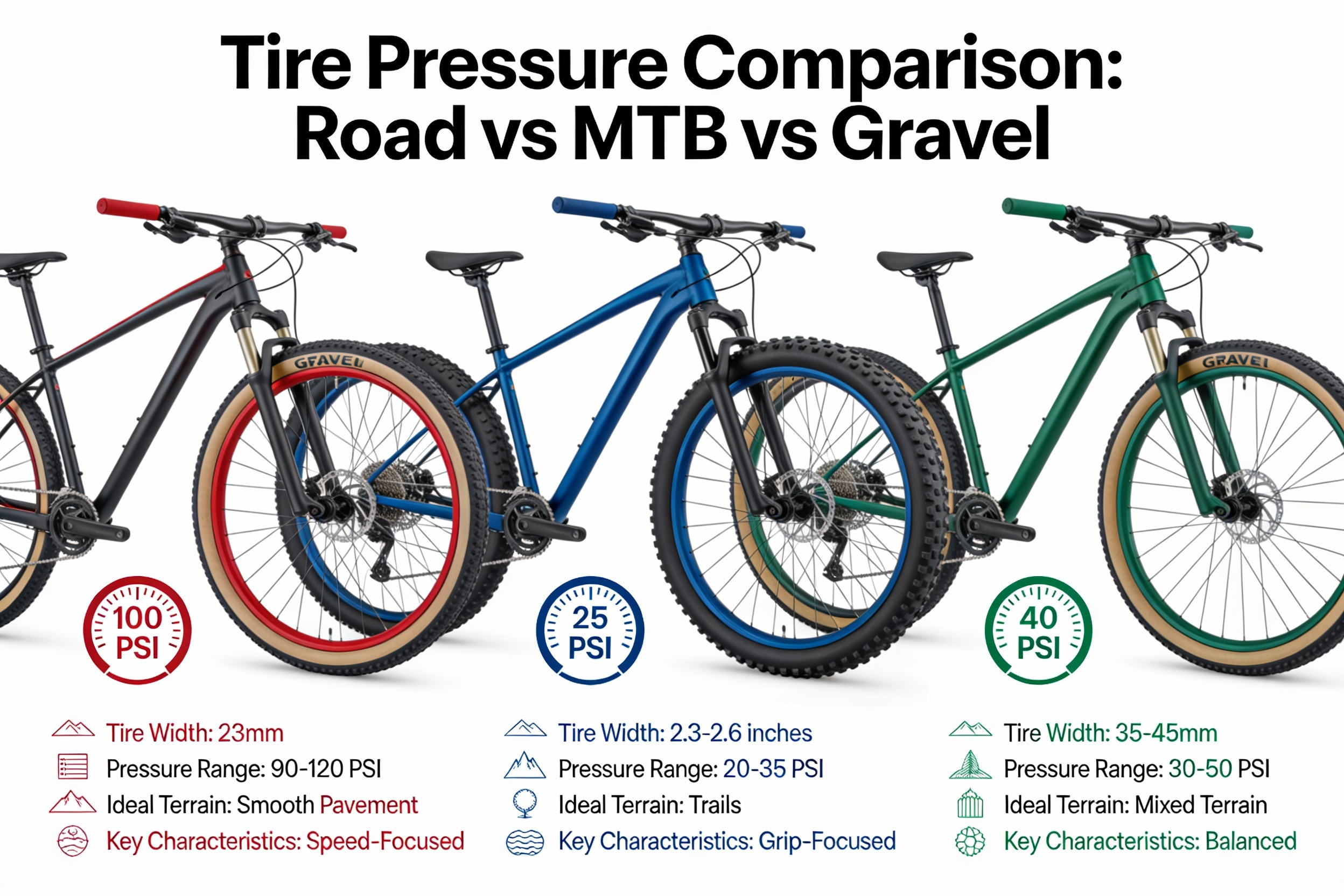
What is Bike Tire Pressure and Why Does It Matter?
Tire pressure is measured in PSI (pounds per square inch) or BAR and represents how much air is inside your bike tire. Getting the right pressure is crucial because it directly affects your bike’s performance, comfort, safety, and how long your tires last.
Think of tire pressure as the foundation of your bike setup—too low and you risk flats and sluggish handling; too high and your ride becomes harsh and uncomfortable. The good news? Finding the perfect pressure for your bike is easier than you think, and this comprehensive guide will walk you through every essential step.
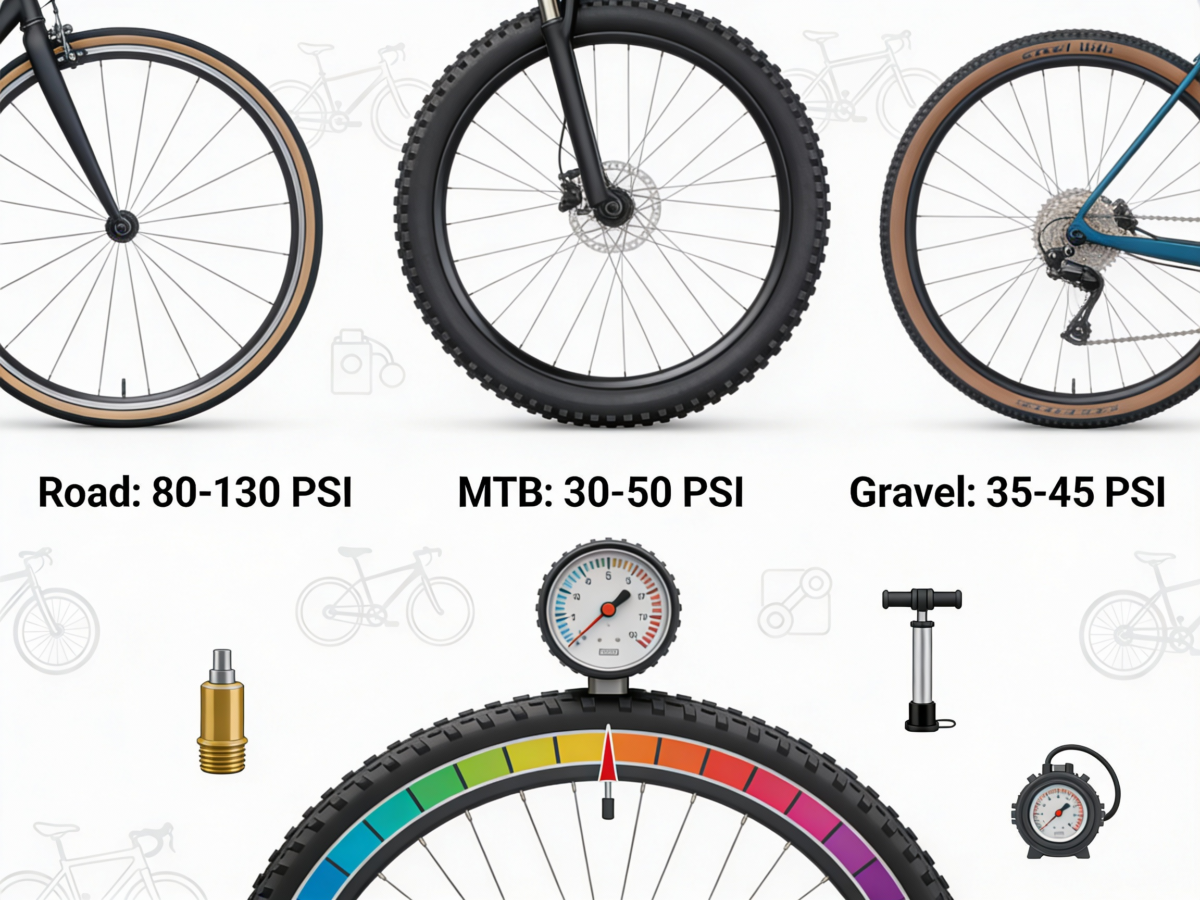
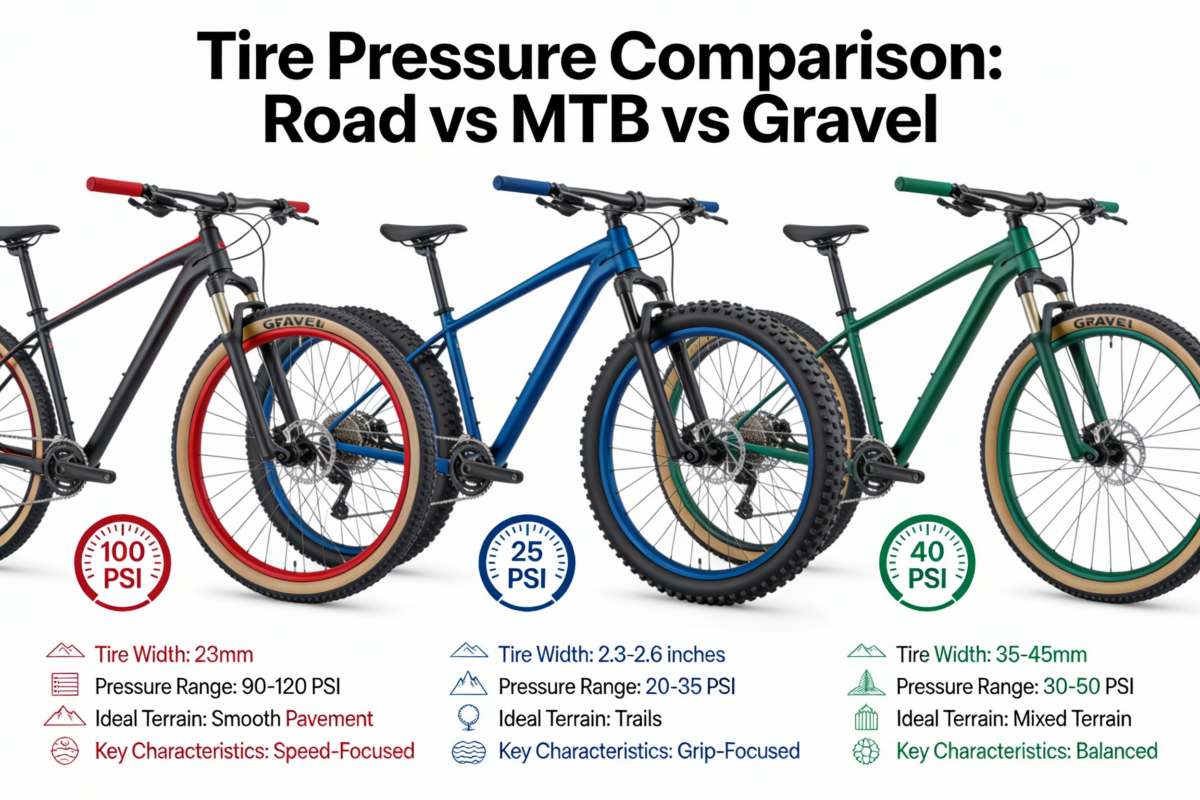
Quick Reference Table: Tire Pressure by Bike Type
⚠️ Important: Always check the sidewall of your tire for the manufacturer’s recommended pressure range. This is your starting point!
Road Bikes: Getting the Perfect Pressure for Speed
Road bikes are built for efficiency and speed on smooth surfaces, which is why they require higher tire pressure than other bike types. Higher air pressure lets tires roll easier and faster because there’s less surface area flexing and deforming.
Recommended Road Bike Pressures
General Guidelines by Rider Weight:
- Light riders (under 140 lbs/64 kg): 85-95 PSI
- Average riders (140-185 lbs/64-84 kg): 95-110 PSI
- Heavy riders (over 185 lbs/84+ kg): 105-130 PSI
By Tire Width (for ~155 lb / 70 kg rider):
- 23mm tires: 110-130 PSI
- 25mm tires: 95-115 PSI
- 28mm tires: 85-105 PSI
- 32mm tires: 70-90 PSI (wider tires allow lower pressure)
Key Considerations for Road Bikes
Tubeless vs. Tubed Tires:
Modern road bikes increasingly use tubeless tires, which allow you to run 2-3 PSI lower than traditional tubed tires while maintaining the same performance. This provides noticeably better comfort without sacrificing speed.
Why Rear Tire Pressure Matters:
Your rear tire carries about 60% of your body weight, so it should run about 5-7 PSI higher than your front tire. This keeps the bike balanced and prevents pinch flats—those painful double punctures that happen when your tire compresses against the rim.
Weather Adjustments:
- Wet roads: Lower pressure slightly (2-3 PSI) for better grip
- Hot days: Check pressure in the morning, as heat increases PSI
- Cold weather: Add 2-3 PSI to compensate for temperature drops
Mountain Bikes: Balancing Grip and Control
Mountain bikes require significantly lower tire pressure to provide traction on loose, technical terrain. Unlike road bikes where higher pressure means speed, on mountain bikes lower pressure equals better grip because more of the tire comes into contact with the ground.
Mountain Bike Pressure Guide by Riding Style
Cross-Country (XC) Riding:
- Front: 25-30 PSI | Rear: 28-32 PSI
- Why: Higher pressure reduces rolling resistance for climbing and speed
Trail Riding (Most Common):
- Front: 22-28 PSI | Rear: 24-30 PSI
- Why: Balanced pressure for mixed terrain and moderate technical sections
Enduro/All-Mountain Riding:
Downhill (DH) Riding:
MTB Pressure Adjustment Factors
Tubed vs. Tubeless Tires:
Tubeless setups are common for MTBs and allow for lower pressures (20-30 PSI) because there’s no inner tube to pinch. If you’re running inner tubes, you should pump your tires about 5 PSI higher than the tubeless recommendation to prevent pinch flats.
Rider Weight Matters:
Heavier riders need higher pressure to prevent the tires from bottoming out (compressing all the way to the rim). A good rule of thumb: add 1-3 PSI per 20 pounds of body weight above 185 lbs.
Tire Width Impact:
Wider tires can run lower pressure—they have more air volume to absorb shock. This is why fat bikes can run incredibly low pressures (1-6 PSI in soft snow).
Gravel Bikes: The Goldilocks of Tire Pressure
Gravel bikes are the versatile middle ground, designed for both smooth roads and rough terrain. Finding the right pressure balances speed, comfort, and control—you’re looking for that “sweet spot”.
Gravel Bike Pressure Chart by Rider Weight (40mm tires)
Gravel Riding Tips
For Different Tire Widths:
For 45mm tires (wider gravel tires), reduce pressure by 2-5 PSI compared to 40mm tires. Generally, a pressure of around 3 bar (43 PSI) is common for most gravel riders, though this varies depending on terrain, rider weight, and personal preference.
Front vs. Rear Strategy:
Keep front tire about 0.5 BAR (7 PSI) lower than rear for better handling and steering control, as the rear carries more weight.
Terrain Adjustments:
- Smooth gravel: Use higher pressure for speed
- Rough/rocky terrain: Lower pressure 2-3 PSI for comfort and grip
- Bikepacking loaded rides: Add 2-3 PSI to account for extra weight of bags and gear
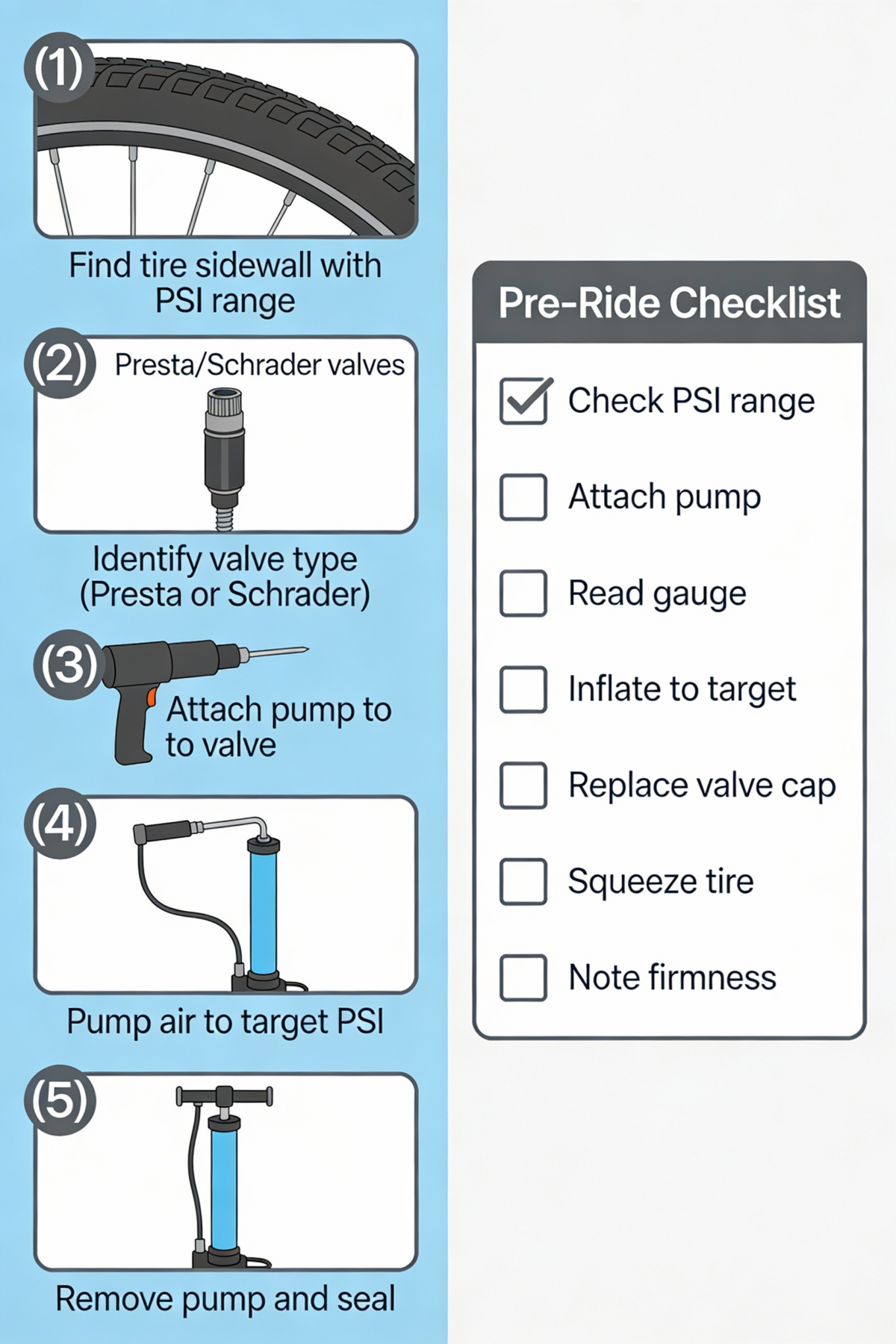
How to Check Your Tire Pressure: Step-by-Step
What You’ll Need
- Bike pump with pressure gauge (floor pump is best for accuracy)
- Valve cap removal (usually on your pump)
- Your tire’s recommended PSI range
Step 1: Find Your Tire’s PSI Range
Look on the sidewall of your tire for printed text showing the recommended pressure range. It will look something like “80-130 PSI” or “5.5-9 BAR.” This is crucial—never exceed the maximum pressure listed.
Step 2: Identify Your Valve Type
- Presta Valve: Thin, tall valve (common on road bikes)
- Schrader Valve: Thicker, shorter valve (common on mountain bikes)
Your pump has attachments for both types.
Step 3: Attach the Pump
- Remove the valve cap and set it aside safely
- If using a Presta valve, unscrew the top valve nut slightly (don’t remove completely)
- Firmly attach the pump’s chuck to the valve
- For Presta: Some pumps flip a lever to lock in place
- Check the gauge on your pump to see current pressure
Step 4: Inflate to Target Pressure
Slowly pump air into the tire while watching the gauge. Stop when you reach your target PSI. For beginners, start at the middle of the manufacturer’s recommended range.
Step 5: Remove Pump and Seal
- For Presta: Flip the release lever and gently wiggle the pump off
- For Schrader: Simply pull the pump straight off
- Quickly replace your valve cap
- Check that your tire feels firm but not rock-hard
Pro Tip: The Thumb Test (Human Pressure Gauge)
Once you know what your correct pressure feels like, you can do a quick check by pressing your thumb into the tire. At the right pressure, your thumb should compress the tire only about ⅛ inch (3mm). This method works best when you’re familiar with how each of your bikes’ tires feel at their proper pressure.
How to Learn:
Every time you pump up your tires with a pressure gauge, use your thumbs to feel the tire at that specific PSI. Do this repeatedly, and you’ll develop the ability to estimate pressure by feel—incredibly useful when you get a flat on the trail and need to use a hand pump with no gauge.
Temperature and Seasonal Adjustments
Here’s something many beginners don’t realize: temperature dramatically affects tire pressure! Understanding this relationship is crucial for consistent performance year-round.
How Temperature Works
When air heats up, molecules move faster and spread out, increasing PSI. When air cools down, molecules slow down and compress, decreasing PSI.
The Rule of Thumb:
For every 10°F (5.5°C) change in temperature, tire pressure changes about 2%. This may sound small, but it adds up. A 30 PSI mountain bike tire loses approximately 3 PSI in a 50°F temperature drop. A 100 PSI road bike tire gains about 2 PSI on a hot afternoon.
Seasonal Tire Pressure Adjustments
Winter (Cold Weather):
- Add 2-3 PSI to compensate for pressure loss
- Check tire pressure more frequently (weekly rather than monthly)
- Your morning pressure will be lower than afternoon pressure
- In regions with -50°F seasonal swings, expect 5 PSI loss
Summer (Hot Weather):
- Check pressure in the morning before riding
- Don’t add air based on hot afternoon readings
- Lower pressure 1-2 PSI if riding in intense heat
- Avoid checking and inflating in direct sunlight
Spring/Fall (Seasonal Transitions):
- Adjust pressure when changing seasons
- Monitor the first few rides at new temperatures
- Be especially vigilant during these transition periods when temperatures fluctuate daily
Pro Tip: Tire pressure also increases during riding due to friction from the road/trail. Don’t deflate tires right after a ride—wait until they’re cool to get an accurate reading.
Common Tire Pressure Problems and Solutions
Troubleshooting Checklist
How to Avoid Common Problems
Preventing Pinch Flats:
The most common flat for mountain bikers is the “pinch flat” or “snake bite,” which occurs when under-inflated tires compress all the way to the rim. Avoid this by:
- Not letting pressure drop below manufacturer’s minimum
- Adding 3-5 PSI extra for protection on rough terrain
- Checking pressure before hitting rocky or bumpy sections
- Using tubeless tires if possible (they can run lower without pinch risk)
Maintaining Tire Longevity:
- Check pressure weekly if riding regularly
- Don’t exceed maximum rated PSI by more than 5%
- Lower pressure appropriately for terrain (don’t max out daily)
- Inspect sidewalls for cracks or dry rot
Getting Consistent Readings:
- Always use the same pump for consistency
- Check pressure in the morning (before riding)
- Wait 30 minutes after riding before checking
- Ensure proper pump chuck attachment to valve
Beginner Tire Pressure Checklist
Use this checklist before every ride to ensure optimal performance:
Pre-Ride Pressure Check
- ☐ Check tire sidewall for recommended PSI range
- ☐ Attach pump gauge to valve correctly (Presta or Schrader)
- ☐ Read current pressure and compare to target
- ☐ Add or release air to reach target PSI (mid-range if unsure)
- ☐ Replace valve cap securely
- ☐ Squeeze tire to verify firmness (thumb test)
- ☐ Note if pressure feels different than normal (potential leak)
Weekly Maintenance
- ☐ Inspect tires for debris or punctures
- ☐ Check pressure on both wheels
- ☐ Adjust for seasonal temperature changes
- ☐ Look for slow leaks (pressure loss over days)
Monthly Deep Check
- ☐ Inspect tire sidewalls for cracks or wear
- ☐ Test valve caps for leaks
- ☐ Check rim tape condition (prevents pinch flats)
- ☐ Consider tire replacement if approaching wear limits
Quick Reference: PSI to BAR Conversion
Converting between PSI and BAR is straightforward:
| PSI | BAR | Ideal For | Bike Type |
|---|---|---|---|
| 20-30 | 1.4-2.1 | Fat bikes, downhill MTB | Specialized |
| 30-50 | 2.1-3.4 | Mountain bikes | MTB |
| 50-70 | 3.4-4.8 | Hybrid and urban bikes | Urban/Casual |
| 70-130 | 4.8-9.0 | Road bikes | Road |
Formula: PSI ÷ 14.5 = BAR (or BAR × 14.5 = PSI)
FAQ: Tire Pressure Questions Answered
Q: Can I use a car tire pressure gauge on my bike?
A: Technically yes, but car gauges aren’t accurate for low-pressure mountain bike tires. Invest in a bike-specific pump with gauge for accuracy.
Q: Should I deflate tires while traveling long distances?
A: No! Maintain recommended pressure. Lower pressure increases rolling resistance and tire wear.
Q: What’s the difference between 80 PSI and 90 PSI on a road bike?
A: 10 PSI affects comfort and grip noticeably. Test both to find your preference.
Q: Can I overfill my bike tires?
A: Yes, but rarely causes immediate damage. Stick to manufacturer max pressure—exceeding it wastes energy and reduces comfort.
Q: Do I need different pressures for climbing vs. descending?
A: Not necessary for beginners. Once experienced, some riders lower pressure 2-3 PSI for descents to improve grip.
Q: How often should I pump my tires?
A: Check weekly if riding regularly. Road bike tires may lose 5-10 PSI per week; MTB tires lose less.
Q: Is it bad to let tires sit unpumped?
A: Not immediately, but low pressure harms tire shape and increases flat risk. Always restore pressure before riding.
Q: What pressure is safe for my valve type?
A: Presta valves handle high pressure (80-130 PSI) well. Schrader valves handle all pressures equally. Check your rim specs for maximum pressure limits.
Final Tips for Tire Pressure Success
- Always start with the manufacturer’s recommended range printed on your tire sidewall
- Use a quality floor pump with an accurate gauge—it’s one of the best investments for cycling
- Check pressure weekly if you ride regularly—it’s the easiest maintenance task
- Adjust for temperature when seasons change (±2-3 PSI per season)
- Remember: feel matters—once you know what your pressure feels like, you can do quick checks anywhere
- Write down your ideal pressures and keep them in your phone or on your bike frame for quick reference
- Experiment within the recommended range to find your personal sweet spot
- Monitor your tires regularly—pressure loss is normal and expected over time
- Use tubeless if possible—it allows for lower, more comfortable pressures without pinch flat risk
- Trust the data—when in doubt, follow the tire manufacturer’s recommendations
Content Summary
This comprehensive beginner-friendly blog post includes:
✓ Clear explanations of PSI, BAR, and pressure concepts
✓ Specific pressure ranges for road, mountain, and gravel bikes
✓ Tables and checklists for easy reference and action
✓ Step-by-step instructions with valve type identification
✓ Temperature and seasonal adjustment guidance
✓ Troubleshooting section with visual table for common problems
✓ Beginner-friendly formatting with headers, bullet points, and visual breaks
✓ Professional FAQ section addressing common concerns
✓ Multiple reference tables for quick lookup
✓ Pro tips based on expert cycling sources